
Social Media vs your brain
Social media hacks your brain, bro!

Hello and welcome to this edition of The NeuroNinja Newsletter!
Action Your Potential (AYP) is all about helping people unlock the gift of themselves – through the transformative power of neuroscience.
If you missed last week’s edition, you can catch up here!
In this edition we discuss social media, and why it’s literally changing our brains.
We don’t do that here
Now, I – a humble brain nerd – am categorically uninterested in boring you with a battle about whether or not we should have social media, the pros and cons or even if it’s good for society.
Though I do back myself, I fear a well worded substack is not what will change the societal trajectory on this matter.
Suffice it to say, we have social media – and it doesn’t look like it’s going anywhere.
I think it’s obvious to say that we all know that social media has an affect on us and our brains. A lot of us report shorter attention spans, headaches, procrastination and doom-scrolling as side effects of this super addictive digital substance.
In this vein, there is A LOT I could talk about in regards to social media and our inherent wetware*
*Forgive me, I’m trying to come up with more exciting words to use than ‘brain’.
Those other aspects will almost certainly be the subject of future newsletters, so you should totes subscribe so you don’t miss them xoxox.
But today, I want to discuss how social media hacks our brains, can destroy our well-being and how we can #fightback.
It’s fun.
Yeah, it really is. This is fundamentally what causes quite a lot of the problems. Social media, phones and screens in general are extremely exciting for our brains.
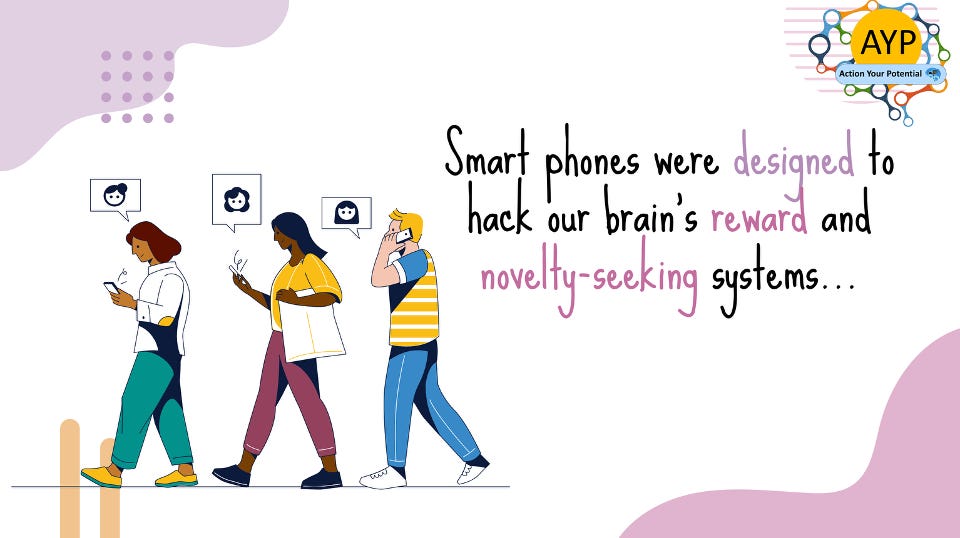
This is because, as many people already know, they are literally designed get us addicted.
The people who designed the pull and release on phones took notes from the people who designed slot machines. This process accesses and hijacks our brain’s dopaminergic reward system, which can quickly lead to addiction.
Let’s talk dopamine
Dopamine is both a hormone and a neurotransmitter that’s released in anticipation of rewards. It helps reinforce behaviours and encourages us to repeat actions that feel beneficial or satisfying.
This process is a fundamental part of brain chemistry. It underpins habit formation, motivation and productivity by strengthening the connection between actions and positive outcomes.
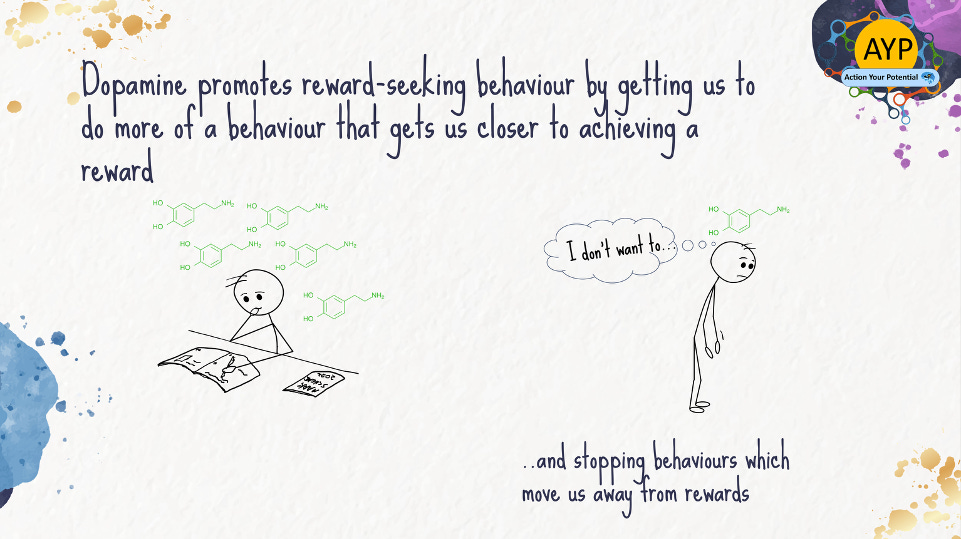
Your brain is naturally action-oriented – it enjoys solving problems and becomes more efficient at tasks it repeats. When you set yourself a goal, such as building a new habit, dopamine is released to help reinforce that behaviour. Over time, the repeated cycle of action and dopamine release strengthens neural pathways, turning deliberate actions into automatic habits.
Social Media platforms plug right into this process.
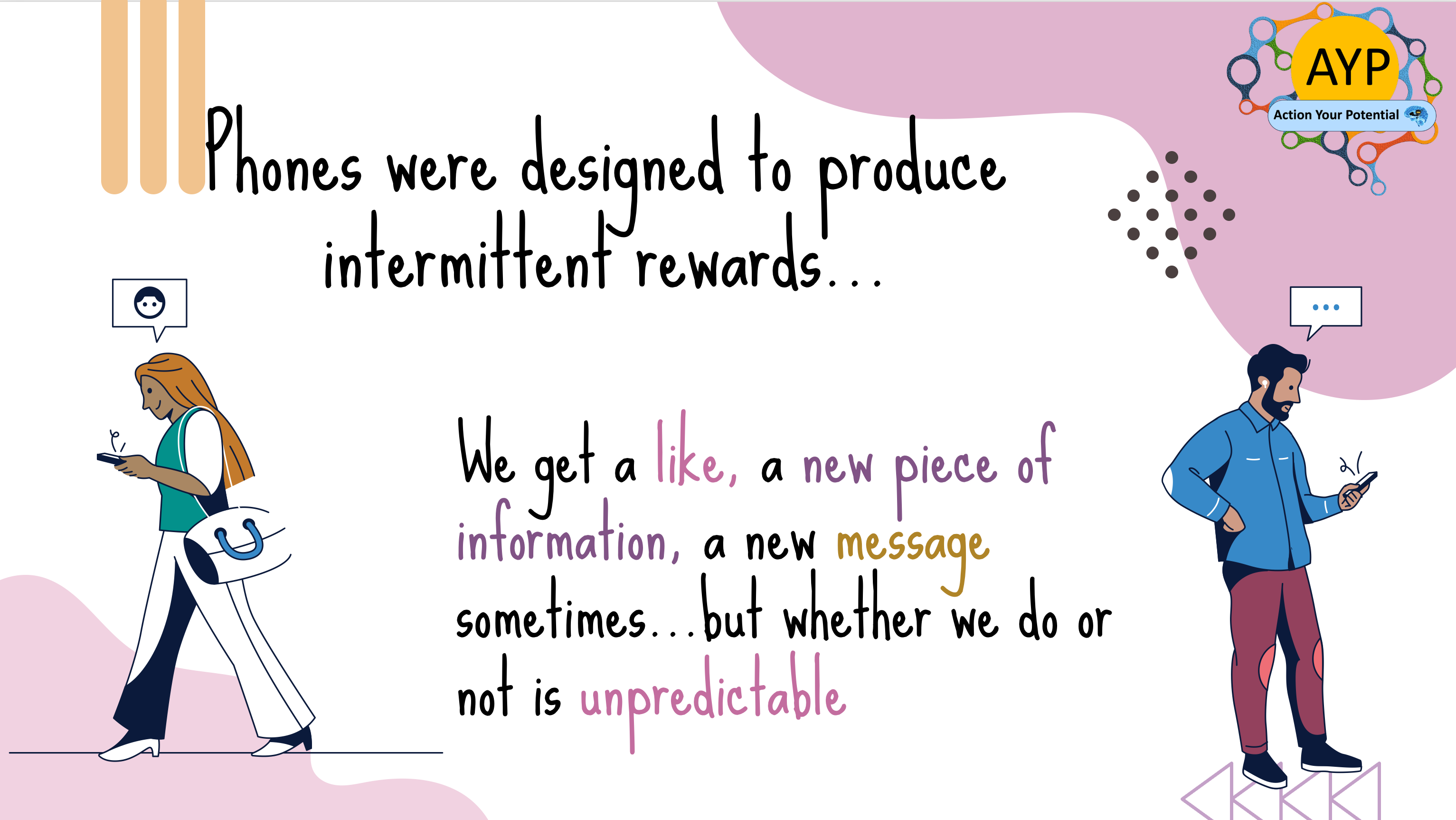
Things like notifications, likes, scrolling and the unpredictability of rewards trigger small bursts of dopamine, training your brain to keep checking for the next hit of novelty, validation, entertainment etc.
It is so addictive because the rewards are inconsistent – you don’t know when you’ll see something exciting or receive attention, meaning your brain stays engaged and constantly in anticipation of the next payoff.
It’s a strong pull
These randomised and intermittent rewards drives us to constantly pick up our phones, as our brains seek that dopamine reward. This effect is so strong it doesn’t even require going on social media.
You probably find yourself randomly picking up your phone and checking for notifications, then sitting on the screen not really realising why you’re on your phone. This is because this behaviour has become an automatic habit.
No simple solution
This is a problem clearly, and what makes it worse is there is no simple solution. The often touted solution is ‘delete it all’, which clearly reduces the ability to keep strengthening this addictive behaviour.
However I feel this solution is too simplistic. Lots of us may need to be on social media, in a work capacity. I am one of these people! I pride myself as not having any personal social media, yet we have numerous social channels for Action Your Potential (which you should follow to make it worth having 😉) and my brain’s social media addiction doesn’t care if I’m on a business account!
Theres also the truth that we do miss out if we aren’t on social media. At its best, social media can serve as a thread to friends and family, sparking conversation and –ideally – in-person connection.
Ironically, whilst social media can make us feel isolated, not having it at all can cut us off even more.
So, what can we do?!
I just want to caveat these pieces of advice by noting that if there were some complete perfect solution – you’d already be doing it. Instead, as with all things brain, change takes time, energy and effort.
One powerful way we can reduce the strength of this social media habit is by turning notifications off, and only using these apps at certain times of the day.
No notifications, means no obvious direct and clear intermittent rewards. You’ll still find yourself tapping your screen constantly, but when there’s nothing new to do this should reduce the amount of dopamine released.
Equally, only using social media at certain times of day is helpful. This will help us practice and re-strengthen our attention spans during our work/school days.
However, I do just want to note that we shouldn’t be using social media late into the evening. This is because basically your executive function circuits, your prefrontal cortex, is absolutely knackered at the end of a long day. This means we are digging around in our emotional reasoning circuits, our worry system, etc.
The lack of prefrontal cortex activation at this time means it can be extremely hard to pull ourselves out of doom scrolling loops, and the constant sympathetic nervous system activation of our screens reduces our ability to go to sleep.
Friction, baby.
Now I sound like my science teacher. Shoutout, Dr Bebb! Creating small bits of friction for our brain to partake in this addictive behaviour also profoundly helps. This can be as simple as moving (and hiding) your social media apps, so your brain doesn’t reach for them as much.
Equally, if you have the means, using social media on unoptimised devices profoundly reduces their addictiveness.
Honestly, try doomscrolling Instagram on a laptop, where you have to manually click each reel and the formatting is all busted. It’s nowhere near as fun.
So, where does this leave us?
Not in a dramatic “delete everything and move to a cabin in the woods” kind of place – but instead a more realistic one: small, consistent actions that slowly retrain your brain’s relationship with your phone.
The goal here isn’t to become someone who never scrolls. It’s to become someone who scrolls on purpose 😎 #purposefulscroller #legend
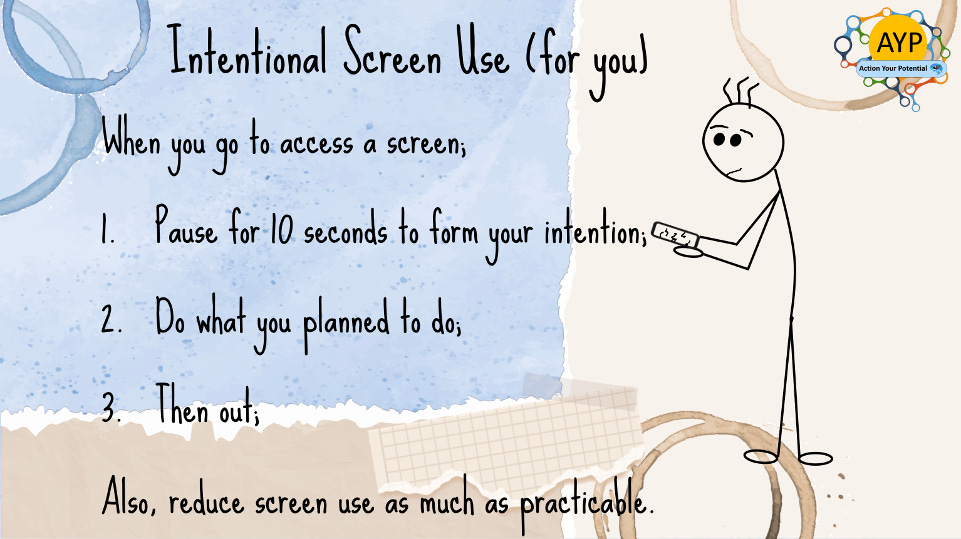
Start by removing the easy dopamine traps. Turn off non-essential notifications and move social apps off your home screen so they’re no longer the first thing your brain reaches for during a moment of boredom or stress. These tiny bits of friction matter – they interrupt automatic behaviour and give your prefrontal cortex just enough time to ask, “What am I even doing?”
Next, create intentional windows for social media. Instead of dipping in and out all day, decide when you’ll check in – maybe once at lunch and once in the early evening. Outside of those times, notice the urge without acting on it immediately. Each time you pause, you’re strengthening the neural pathways associated with attention and self-regulation.
Protect your evenings fiercely. Your brain is tired at the end of the day, and that’s when doom-scrolling hits hardest. Swap late-night scrolling for something that genuinely helps your nervous system wind down (reading is one of the most profound ways, btw 😉). Better sleep alone will make resisting the scroll dramatically easier tomorrow – plus it’ll improve every other aspect of your well-being.
And perhaps most importantly: replace, don’t just remove. Your brain seeks stimulation and reward – that’s not a flaw, it’s biology.
If we build in other small sources of novelty and satisfaction throughout your day: meaningful conversations, movement, learning something new etc… your life will contain richer sources of dopamine, thus loosening the pull of social media.
None of this will be perfect. You will still pick up your phone automatically sometimes. (The number of times I’ve done exactly that as I’ve been writing this newsletter 😭)
What matters is practice. Every small boundary you set, every moment of awareness you build, is your brain learning a new behaviour. Over weeks and months, those tiny decisions accumulate into something powerful: a nervous system that feels calmer, an attention span that stretches further, and a sense that you – not an algorithm – are choosing where your time and energy go.
We don’t have to reject social media entirely. But we do get to decide how much of ourselves we hand over to it.
Want something more productive to do on your phones?
Boy, do I have an offer for you!
Our paradigm-remaining podcast One Brain At A Time releases every Monday!
Join myself and Andy Feist as we cram some life changing neuroscience into highly respectable 30 minute episodes!
In our latest, we discussed social media and it’s impact on a crucial aspect of our well-being, social health.
You can watch the full episode below!
… and listen wherever you get your podcasts! 🎧
Our show is available on all major podcast platforms
📲 we’re on social media too!
Follow us on social media!
📜 Why not subscribe, whilst you’re here 😉!
Join the hundreds of people who read this newsletter every Friday! Just click the button below to subscribe for free.
Thank you for reading this edition of The NeuroNinja Newsletter!
The NeuroNinja Newsletter was written by Adam Wright. Edited by Angela Wright.