
Should we all 'friction-max'?
The neuroscience behind 'friction-maxxing'

Hello and welcome to this edition of The NeuroNinja Newsletter!
Action Your Potential (AYP) is all about helping people unlock the gift of themselves – through the transformative power of neuroscience.
If you missed last week’s edition, you can catch up here!
In this edition we discuss why the latest Gen Z lingo has some pretty strong neuroscientific foundations.
Um, what is that word in the title?
Friction-maxxing is the idea that we should add bits of inconvenience and difficulty into our routines.
It’s apparently* the term all the kids are using, and that must be the case as I read about it in The Guardian – the paragon of all things Gen Z and current.
*Yes, reader. I am indeed Gen Z, but I know as little about the world of TikTok trends as you do.

I’m not an etymologist, nor am I here to even talk at length about the term and where it came from, but I must say it caught my attention – as it accurately describes a pretty fundamental principle of brain science.
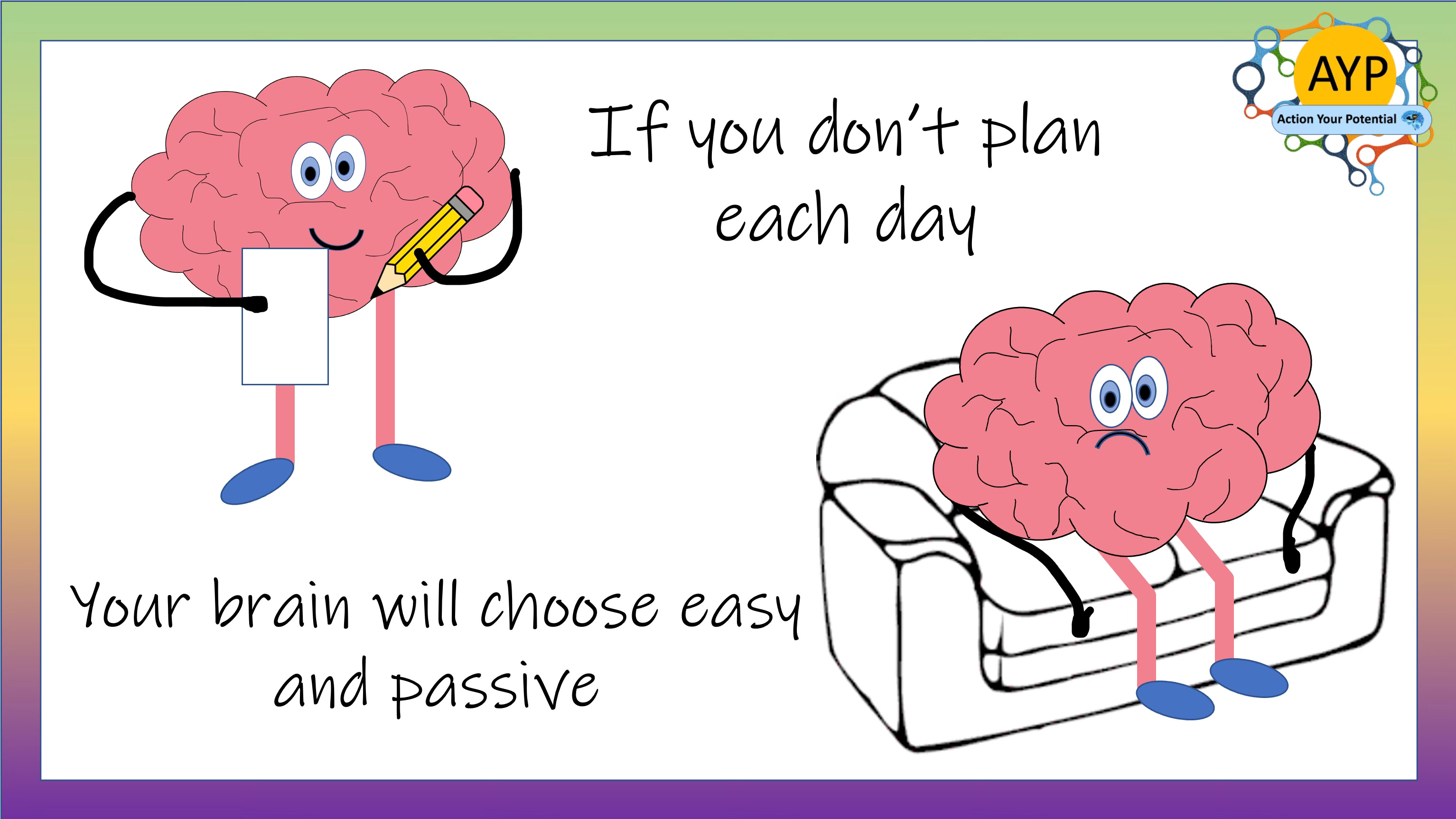
Passive and easy? Yes please
Your brain is the most powerful processing device in the known universe, and it’s not even close. If your brain was up against a MacBook Pro on a Curry’s* comparison page it wouldn’t even be close – added bonus your brain came for free!
*Other electronics shops are available, as are other laptop brands.
All we have to do to realise this is think about everything your brain is doing right now. Consciously you’re translating these weird little symbols into words, understanding them individually and as a flowing narrative – you may also be thinking about dinner, eating food, listening to music or a podcast. I don’t know what you get up to when you read this!
Those are just some of the conscious behaviours, things you choose to do. Your brain is also regulating your heart rate, making you blink, digesting your food, managing the amount of oxygen in your blood, releasing hormones etc etc etc etc. We would literally be here all day. All this, and it only uses about 20 watts. For comparison, your desktop PC probably uses around 175 watts.
Your body and brain are an incredible machine.
Because your brain is already doing so much, it’s not a huge fan when things change. When you notice a change in the world, you suddenly need to use a lot more energy to construct the new model for what’s going on.
This means your brain is a fan of passive and easy, aren’t we all!
One could argue the pursuit of comfort, passivity and easiness is a driving force for human history – it’s a bit easier to live in a cave than in a field for a caveman – it’s a bit easier to hunt with a spear etc etc.
However, just because this is what our brains want – doesn’t mean it’s good for us.
Neuroplasticity. Remember me?
Your brain gets better at what you do with it, whatever that may be.
This means that, whilst the ubiquitous convenience of the modern world is vast – it means we get better at relying on this and thus worse at coping well with some more basic aspects of our day to day life.
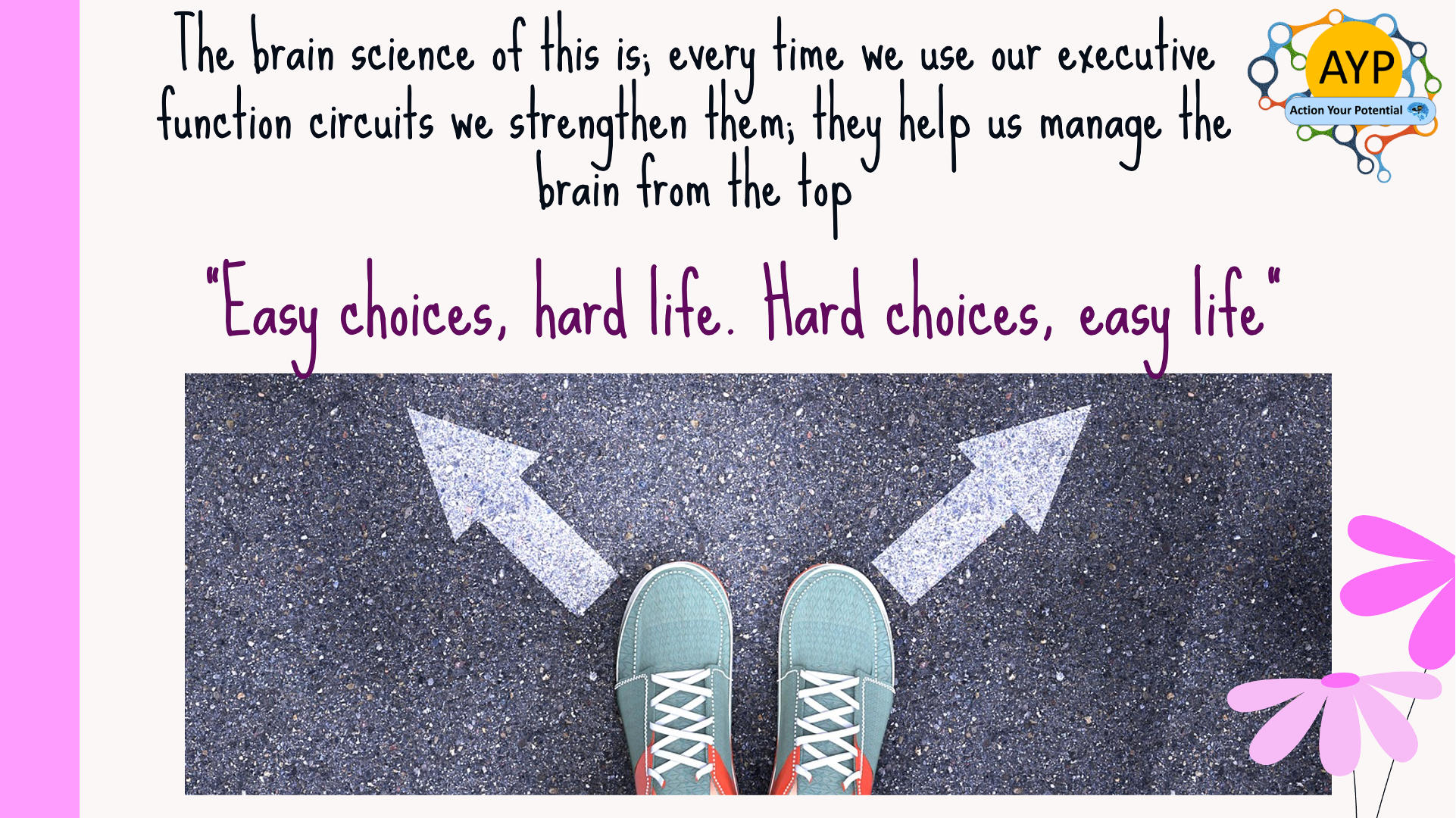
Easy Choices, Hard Life
Without getting into too much detail, you have a bunch of different parts of your brain that do different things.
One crucial part is our executive function circuits, these are the circuits at the top of your head that allow you to manage your brain from the top.
These circuits are responsible for positive behaviours like patience, kindness, tolerance, attention etc. These are skills we need to be successful, in every aspect of our lives.
In many ways, these are the circuits we develop a lot in school and use a lot in life. Doing the things we have to, even though we may not want to.
There’s no guarantee we will develop strong executive function and even if we do if we don’t keep using them – we lose them.
This is why we should friction-maxx, to some degree. We should add challenge and change to our life. Because ultimately we know these things may happen to us anyway, not only does it keep us active and developing – it also means we practice our ability to overcome this challenge and change.
Now, I want to be clear. If you have a nice house I’m not advocating for moving into a postbox. Or giving up all your possessions and drinking only rainwater from oak trees*.
*and to be entirely fair, I don’t think proponents of friction-maxxing are suggesting this either.
But we should absolutely check our reliance on convenience and consistently give ourselves goals, purpose and missions to achieve.
What these bits of friction, challenge and change are for you, I don’t entirely know! For me I’m making more of an effort with my cooking – trying to walk more and rely on my car a little less. Before you blow up the comments my car is a lovely little EV so I’m not polluting but I am heavily reliant on it for general day to day usage.
These little choice-challenges don’t need to be big, in fact it’s better if they aren’t! As we discussed in last week’s edition – the key to sustainable change is these small consistent steps towards a larger goal.
So, maybe you should friction-maxx a little more in 2026, for your brain’s sake.
Thank you for reading this edition!
If you’re enjoying our work you’ll love our podcast.
It will change your life, if you let it.
You can watch the newest episode below!
🎧 and listen wherever you get your podcasts!
Our show is available on all major podcast platforms
Woah, you made it down here!
📲 we’re on social media too!
Follow us on social media!
📜 Why not subscribe, whilst you’re here 😉!
Join the hundreds of people who read this newsletter every Friday! Just click the button below to subscribe for free.
Thank you for reading this edition of The NeuroNinja Newsletter!
The NeuroNinja Newsletter was written by Adam Wright. Edited by Angela Wright.