
One Change At A Time
The profound power of small steps towards progress

Hello and welcome to this edition of The NeuroNinja Newsletter!
Action Your Potential (AYP) is all about helping people unlock the gift of themselves – through the transformative power of neuroscience.
If you missed last week’s edition, you can catch up here!
In this edition we discuss why change is created in small increments and boast about our revamped podcast ☺️
“One step at a time!”
You’ve probably heard this saying before. Hell, you’ve probably put it into practice at some point.
It’s a fairly widely accepted truth about self improvement (especially in the fitness realm) that we should undertake large changes through smaller incremental steps.
Indeed, our ability to make small changes in pursuit of a larger goal is the signifier of whether or not we’ll achieve said goal. No, it’s not just you having deja vu. We did touch on this in last week’s edition about New Year’s resolutions.
However, in this edition I wanted to go a little further in why these small changes can easily amount to substantial ones – and the neuroscience underpinning it.
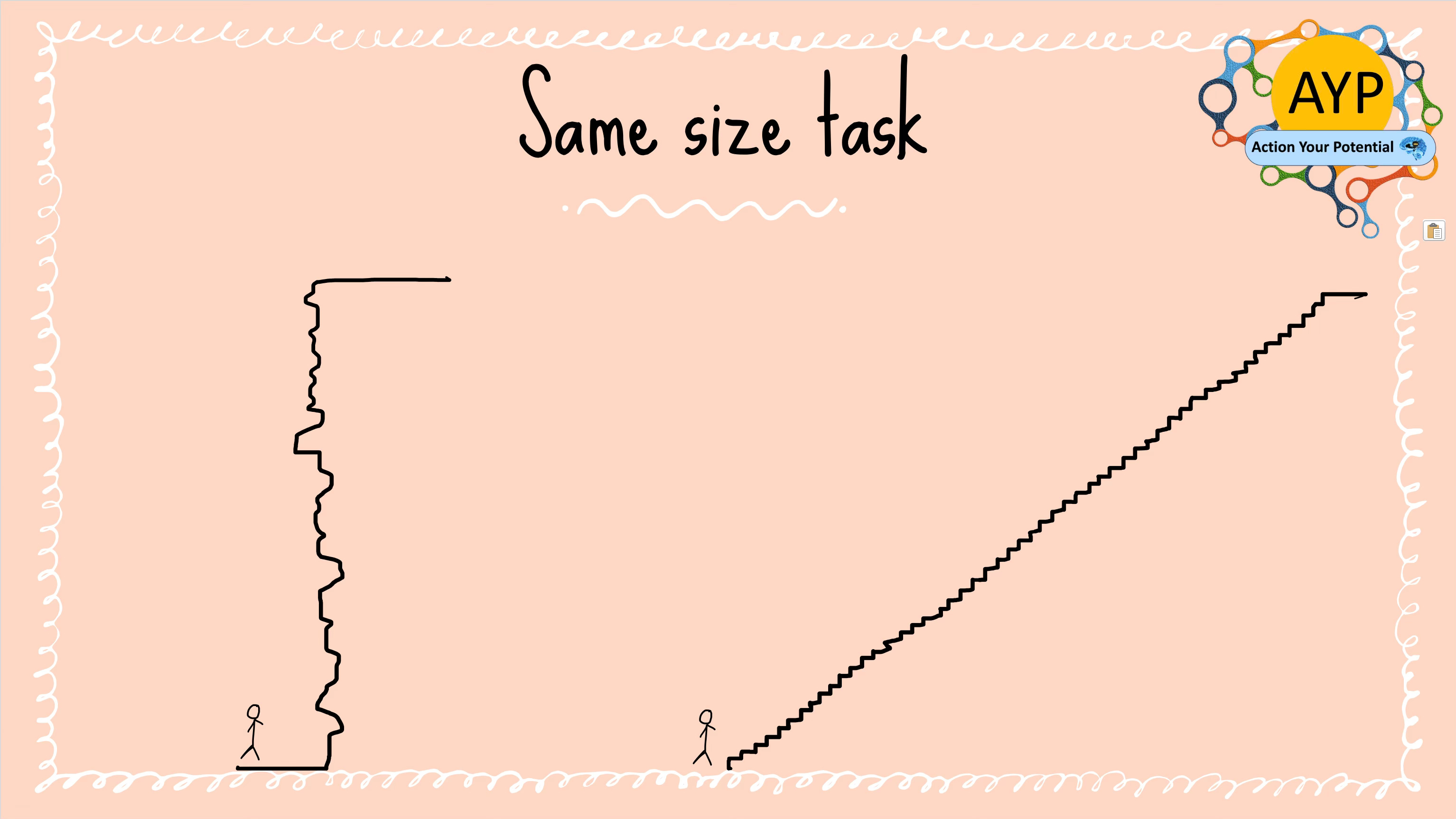
You are changing every day anyway.
One often overlooked aspect of trying to build positive habits and positive change is that we are already chock full of habits and behaviours.
It may not feel like it, but a large amount of what you do every day is already a habit. Positive or otherwise, what you do today is strengthening your ability to do that thing in the future.
This means when we’re pursuing a change, we’re almost swimming against a current… not only are we trying to develop and grow new neural architecture, we’re also battling against that pre-existing schema.
This doesn’t mean we give up! Quite the contrary! This understanding makes it more vital for us to battle against negative habits and behaviours because if we don’t we are in fact strengthening them.
Neuroplasticity and that.
If you did a ctrl f through these newsletters you’d probably find ‘Neuroplasticity’ as the most common word I use. That and ‘indeed’ (old essay writing habits die hard I guess.)
For anyone new here, neuroplasticity is the idea that our brain changes all the time depending on what we do with it. Every time we perform an action, our neurons that allow us to perform that action are strengthened. You literally grow new neurons and new connections, the more densely connected a behaviour – the stronger it becomes.
So, it follows that the first step in changing a negative habit is to stop firing that neural architecture.
Same time, same place.
Depending on what the habit you’re trying to change is, this can be very difficult, especially if the habit change involves a new behaviour, we literally have to schedule it in.
Take a reading habit for example. If you want to read more this year, but don’t currently read at the moment – you need to slot it in.
This is where routine can be your ally!
A super effective way to start making this type of habit change is to build in a reading slot at the same time every day. Before bed is a fab option, as a byproduct of reading is it puts us into our parasympathetic nervous system – allowing us to fall asleep easier.
Doing the new routine at the same time every day is a really effective way to continuously re-fire the new neurons you’re developing, and it makes it easy to keep track of.
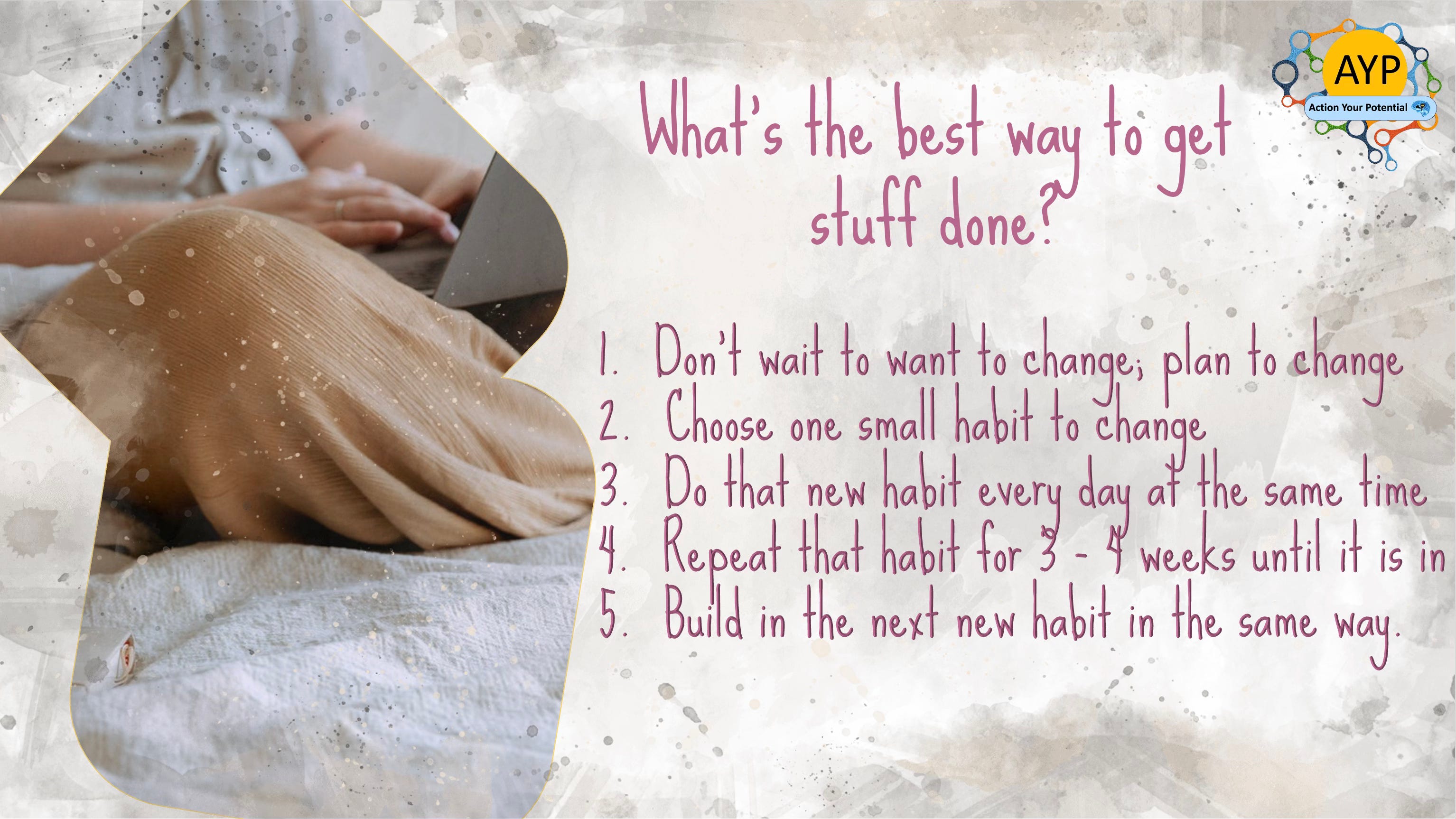
Prove to yourself you can do it.
Another huge reason why small incremental change is so profound is in the realm of beliefs, namely growth-affirming beliefs.
When we set out to achieve something massive, we can quickly be demoralised as after a month’s work it can still seem wildly out of reach.
This is where small changes come in. Back on the book analogy, if you set yourself a lofty but very achievable goal of reading 15 books this year – it can easily get lost in the concern about the sheer size of the goal.
However, as of right now, you just need to focus on the first book.
Day by day, reading for thirty minutes or so before bed you’d polish off most books in a few weeks. Not only are you having a fab time reading these books, you are also showing yourself that you can do it.
This can help us generate strong growth affirming beliefs – a way of thinking about ourselves as capable of doing difficult things.
Rather fantastically, in doing this you are also strengthening your neural architecture for growth affirming beliefs. This means in other aspects of your life you will be more positive and confident in your ability.
That’s a win win eh!
One Brain At A Time
Incremental and consistent progress towards a happier healthier life is what we are all about here at Action Your Potential.
We eat sleep and breathe the fundamental neuro-biological fact that small changes have a huge impact. So we decided to make a podcast about it.*
*Well, revamp a podcast about it…
That’s why we’re excited to announce that AYP Spike has become One Brain At A Time, an Action Your Potential Podcast.
This podcast will change your life, if you let it.
At the top of your neck you have the most powerful processing device in the known universe. But no-one’s ever told you how it works... until now.
Each Monday, Action Your Potential consultants Adam Wright (that’s me!) and Andy Feist strip away the jargon and break down the neuroscience into practical tools you can apply straight away.
Entertaining, evidence-based, and 100% woo-woo free. That’s a guarantee.
Subscribe today wherever you get your podcasts and you can watch full episodes and clips on Youtube.
Our first episode is out now, where Andy and I discuss New Years resolutions and the neuroscience-approved ways to actually achieve them.
You can watch the episode below, or listen through the links below!
🎧 Get us in your ears!
Our show is available on all major podcast platforms
Go on, start your 2026 right 😉
Woah, you made it down here!
Thank you very much, you clearly like a bit of brain science!
You can keep the neuro-natter going by:
📲 Get into your feed!
Follow us on social media!
📜 Subscribing to this newsletter!
Join the hundreds of people who read this newsletter every Friday! Just click the button below to subscribe for free.
Thank you for reading this edition of The NeuroNinja Newsletter!
The NeuroNinja Newsletter was written by Adam Wright. Edited by Angela Wright.