
Exercise fertilises your brain, bro!
The neuroscience behind BDNF, and why exercise helps you learn?!

Hello and welcome to this edition of The NeuroNinja Newsletter!
Action Your Potential (AYP) is all about helping people unlock the gift of themselves – through the transformative power of neuroscience.
If you missed last week’s edition, you can catch up here!
In this edition we’re talking about exercise, and a super hormone called BDNF.
Exercise is good for me, right?
Yes. It really is pretty simple! Exercise is really good for your body, brain and mind.
You’ll know this as well, as after exercising (even if you’re tired) – you’ll feel you’ve achieved something and you probably feel a lot calmer.
When we talk about exercise we often talk about the physical benefits, which are clearly enormous. However, today I wanted to focus on one super specific thing that happens in our brain when we exercise – and why it might entirely change your relationship with sport.
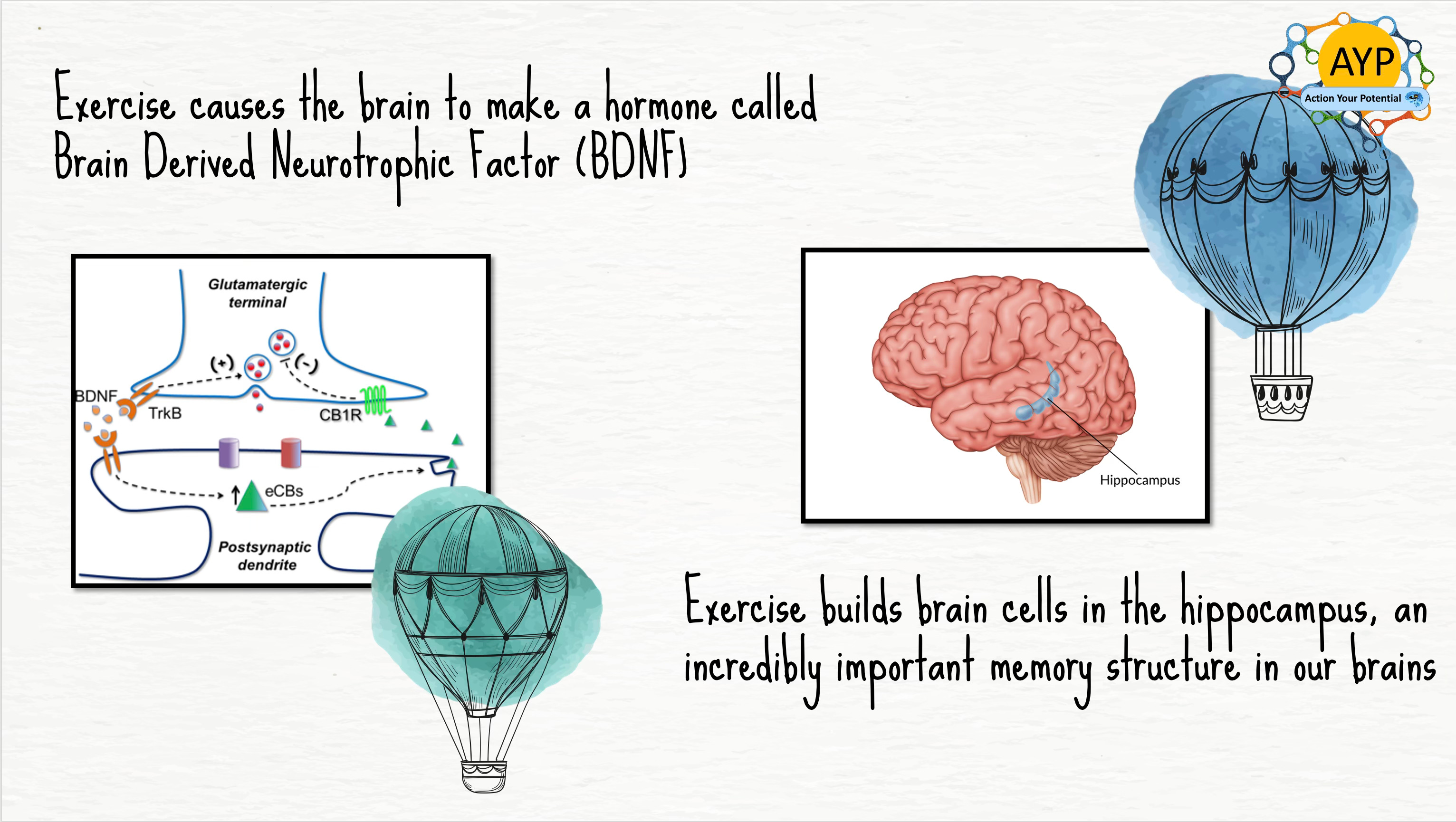
When we are exercising, whatever exercise that is, our brain releases a chemical called Brain-Derived Neurotrophic Factor (BDNF). This chemical is a game changer and I want to talk a bit about why…
But first, why does our brain produce this amazing hormone when we exercise?
A Nerdy Note if you’re interested: Getting bio-technical here, you’d, of course expect that from us, BDNF belongs to a group of chemicals called neuromodulators. These are chemicals that modulate the actions of neurones and the chemicals that bathe them. Neurobiology is some of the most wonderful science on the planet. Anyway, as you were…
Movement = Learning!
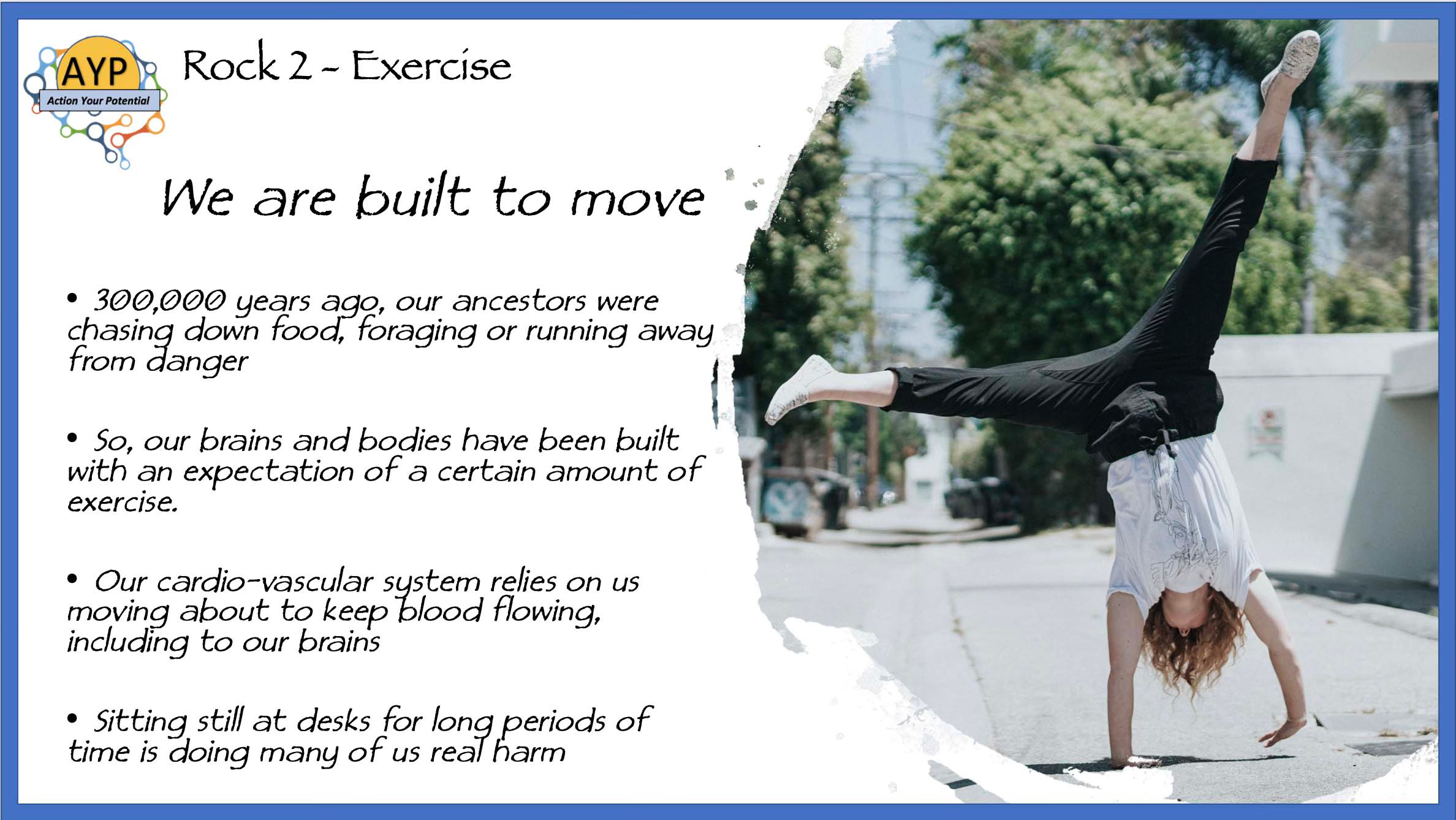
Our brains have evolved to link movement with learning.
For over 300,000 years humans have moved to find food, navigate terrain and avoid (and fight) threats. Our very survival depended on our movement, and our ability to learn as we did it.
Think of a scenario like this. Our ancestors will have had to travel enormously long distances on foot, gather resources, build shelters, navigate unfamiliar terrains… all these trials and tribulations required them to constantly take in new information as they moved – and adjust their behaviour in real time.
So, over history our brains have linked movement and learning together – physical activity and increased cognitive function.
In other words, when your body is active, your brain becomes primed to absorb information, solve problems, and respond creatively to the world around you.
BDNF is the molecular mechanism that makes that evolutionary link possible.
BDNF, baby.
BDNF is one of our brain’s most important hormones for growth and resilience. To figure out why we have to go back to a pretty fundamental part of neuroscience, neuroplasticity.
Neuroplasticity is the idea that whatever you do the most with your brain, consciously or unconsciously, your brain will develop in order to allow you to get better at that thing.
That could be a difficult question in maths, or a challenging task at work, or a gymnastic tumble technique. No matter how much we enjoy something, if we keep on at it – we will improve at it.
To allow us to improve at these things, our brain is constantly growing and developing new and more densely connected neural architecture.
Want more on neuroplasticity? Check out our podcast episode on it, here.
It’s like brain fertiliser!🌱
BDNF massively aids this process of neuroplasticity, think of it like brain fertiliser.
Just like plant fertiliser, BDNF helps our neurons to grow, develop and withstand stress!
Without BDNF, our neurons are more susceptible, vulnerable, and communication between them becomes less efficient.
With plenty of BDNF, however, neurons strengthen their connections, form new ones, and adapt more easily to new experiences, learning, or recovery from setbacks.
What does it actually do tho?
So, verrrrryy basically…. BDNF binds to special receptors on neurons – almost like turning on a set of molecular switches. When these switches activate, they trigger internal changes that make synapses* stronger, promote the growth of new neural branches, and increase the brain’s ability to form long-lasting connections.
*our synapses are the tiny gaps between brain cells, which information is passed across.
The takeaway
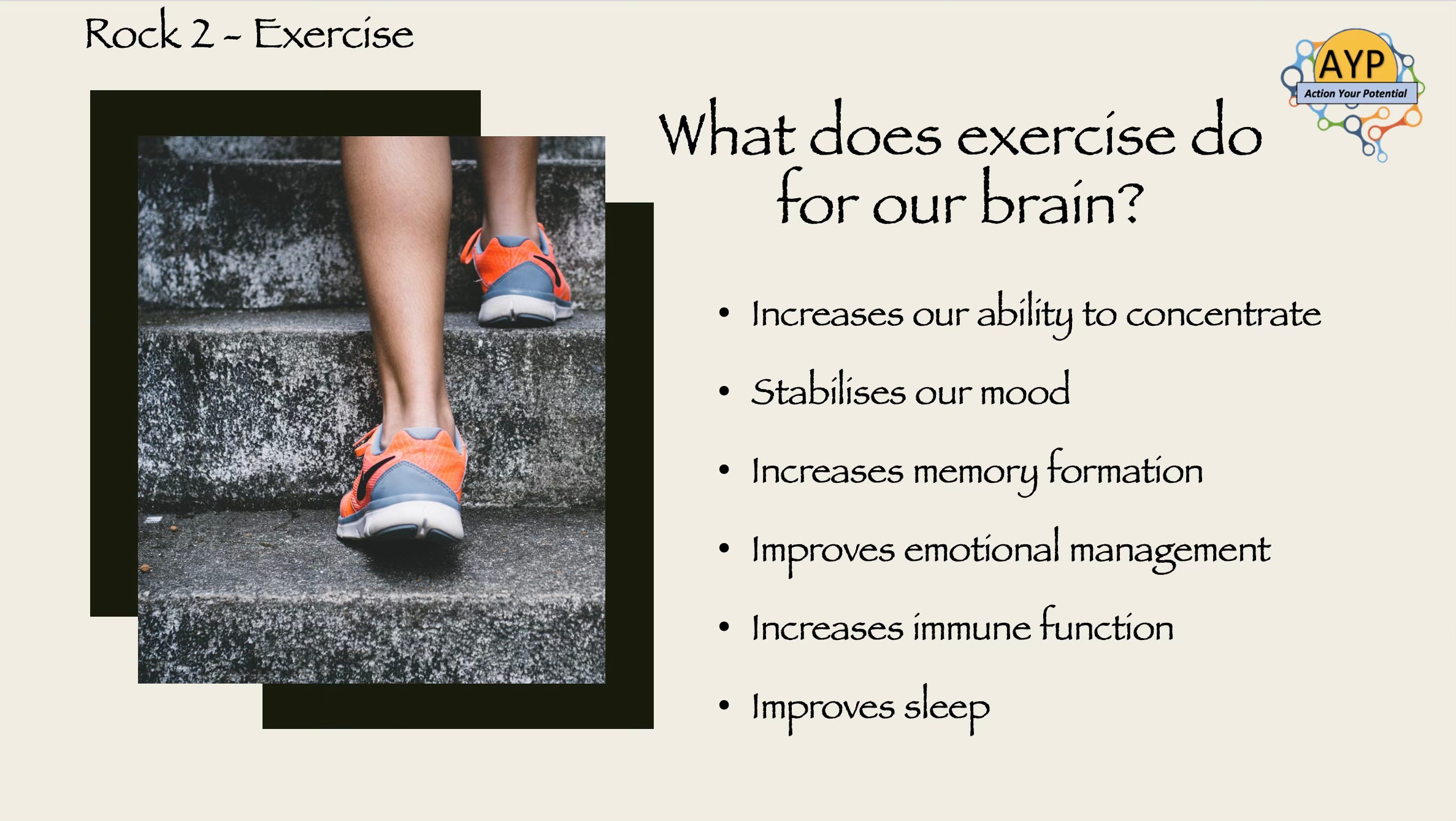
All of this is really just a long way of saying that exercise doesn’t only help you feel better afterward – your brain is actively reshaping itself while you move. So that post exercise clarity, that good achieved feeling is a result of your brain shifting into a more flexible, better-connected state.
And the beautiful part is that this isn’t reserved for elite athletes or people doing complex super complex workouts( Hyrox, I’m lookin’ at you.) A gentle jog, a slow walk, even a few minutes boogieing to Last Christmas… anything that gets your body moving works!
Over time, these tiny boosts add up. Consistent movement creates a brain that’s more resilient to stress, more adaptable in the face of challenges, and more capable of learning new skills.
So if exercise has always felt like something you should do “for your body,” it might be worth flipping the script: you’re also doing it for your focus, your mood, your creativity, your memory, and your long-term brain health.
Thank you very much, you clearly like a bit of brain science!
You can keep the neuro-natter going by:
🎧 Listening to our podcast!
Our show is available on all major podcast platforms!
👀 Watching our podcast!
We upload our full episodes to Youtube, so subscribe today!
📲 Getting us into your feeds!
Follow us on social media!
📜 Subscribing to this newsletter!
Join the hundreds of people who read this newsletter every Friday! Just click the button below to subscribe for free.
TEST: What’s the name of the part of our brain that registers both emotional and physical pain? (NO SCROLLING UP!)
Thank you for reading this edition of The NeuroNinja Newsletter!
Neuro Ninja Newsletter was written by Adam Wright. Edited by Angela Wright.