
Discipline isn't real
Why 'discipline' and motivations aren't reliable forces for long term change.

Hello and welcome to this edition of The NeuroNinja Newsletter!
Action Your Potential (AYP) is all about helping people unlock the gift of themselves – through the transformative power of neuroscience.
If you missed last week’s edition, you can catch up here!
This week we talk about why ‘discipline’ isn’t really a thing.
You gotta be ‘DISCIPLINED’!
This is probably a sentence or a sentiment that you've heard a lot throughout your life. It's certainly one I have!
The way that we're told about discipline often from people who claim to have lots of it, is that you should resist doing the thing you may ‘want’ to do in favour of the things you ‘should’ or ‘have ‘ to do, and if you do this you're very controlled and it's all great and fantastic and you will feel much better for it.
And that is a real thing, obviously. When it comes to setting ourselves targets whether that's wanting to get into running whether that's wanting to change our diet whether that's wanting to change careers; our ability to set long term goals and achieve them is vital.
But discipline is not only ‘not’ a force it is also ‘not’ at all reliable.
Emergence baby
It's time, again, to talk about emergence. This is the pretty complex idea that our body and our brain project our mind… ergo, we are not our brain we are a product of it.
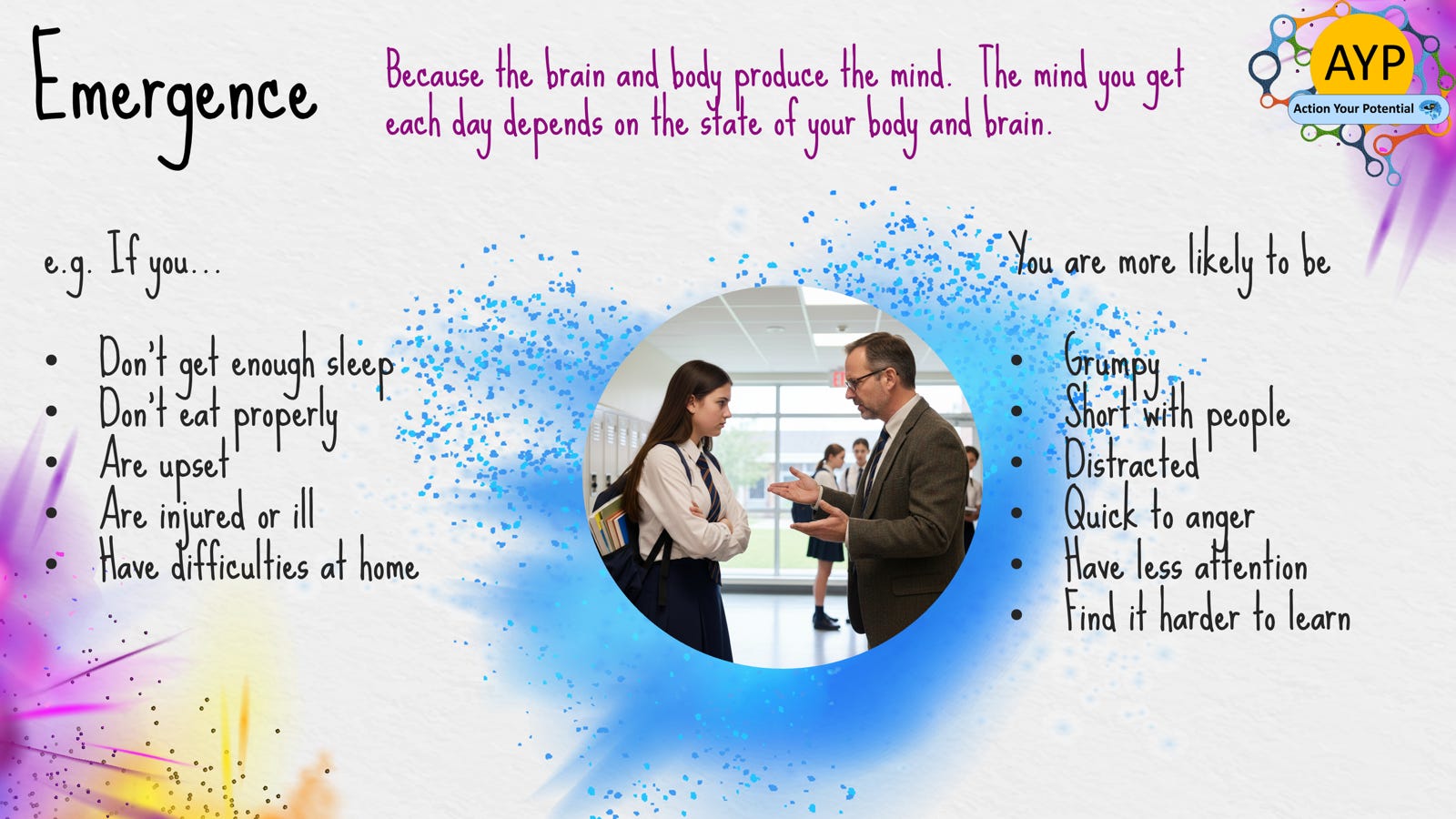
This is where the problem with discipline comes in. It's all very well being super motivated. It's all very well being very disciplined when we set our mind on a target, however this understanding of discipline and mindset omits the fact that when your body and brain change, your mind changes as a result.
The Prefrontal Cortex (PFC)
Another crucial part of discipline to talk about is the the relationship between the prefrontal cortex and our impulsive system.
Very basically at the top front of your brain is your PFC, this is like the CEO of the brain – controlling it from the top and making sure that we get the things done that we don't necessarily want to do.
This is the part of your brain that's massively utilised for work, for school, for chores etc.
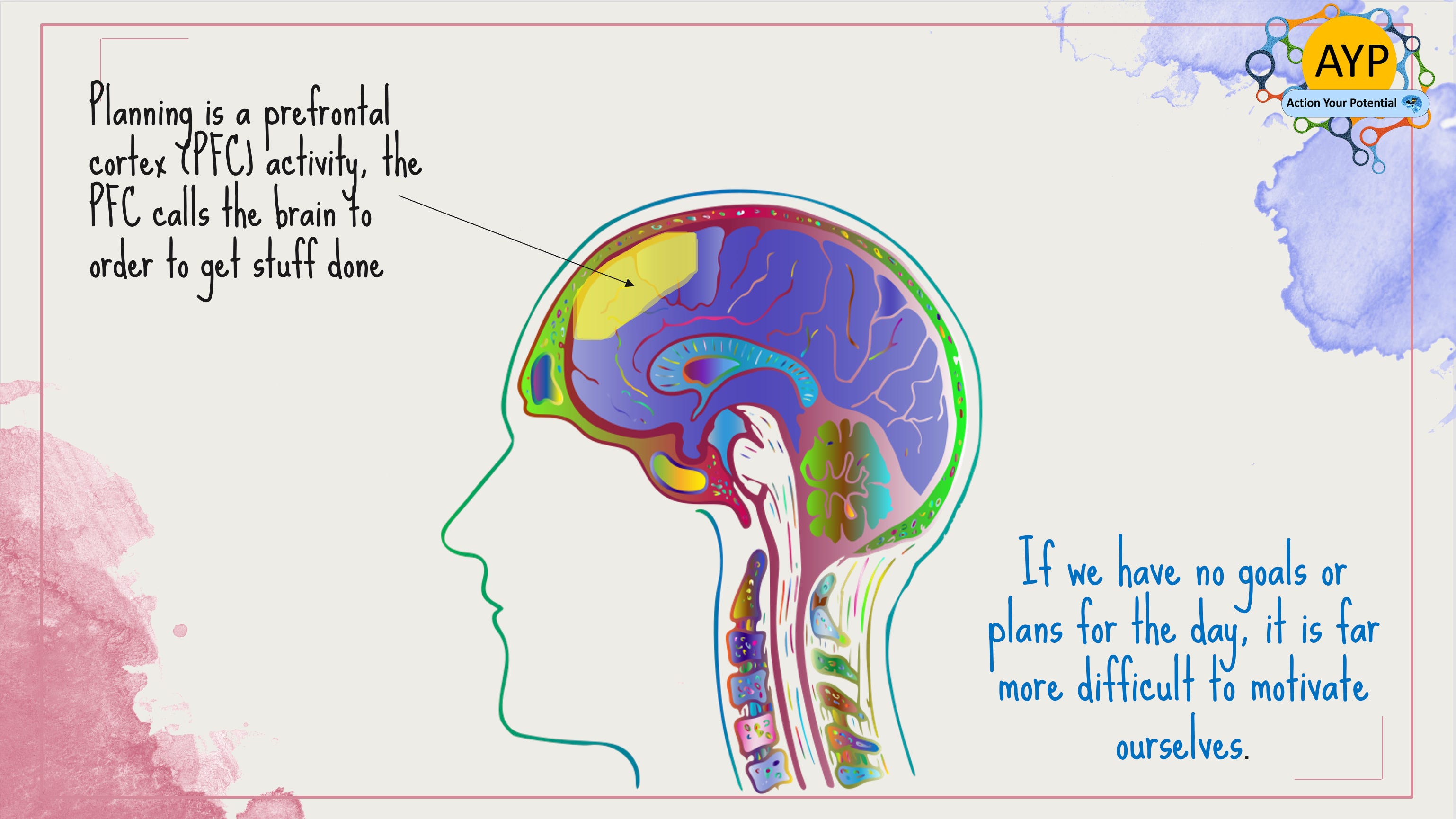
If you've set a goal to not snack and eat healthier or to lose weight et cetera et cetera this is the part of the brain that's making sure you achieve that goal.
However, because it is utilised so much throughout the day to make lots and lots of decisions and make your brain take lots and lots of actions that it would not do otherwise, come the evening, your prefrontal cortex effectively goes off-line. This means the emergency property of your body and brain has far less impulse control and is far more likely to utilise its meso-limbic (impulsive) dopamine system.
It's worth thinking about it like this. You are not the same person in the evening that you are in the morning. Your brain is different. You do not have access to the same rational parts of your brain in the evening that you do in the morning.
If anyone's interested, this is why we often make silly decisions in the evening, emotional decisions we later regret. We just don’t have access to as much of our PFC as we did earlier in the day.
DOPAMINE!
Any discussion about discipline isn't complete without a discussion about dopamine. Dopamine to recap briefly is a reward seeking neurotransmitter which your brain utilises to make it do things.
Broadly, we have two types of dopamine system the impulsive (meso-lymbic) and the meso-cortical (long term). Both the systems are crucial. The impulsive system for example is the part of our brain that sees sugar and eats sugar. The long-term system lets us set goals for the future to be completed that we wouldn't otherwise complete.
It's important to understand the evolutionary benefit of these dopamine systems here. The evolutionary advantage of a cave person being able to set and complete goals is enormous. It meant cave people were more likely to forage for food hunt and gather find shelter et cetera. If the brain was not able to make these cave people do that then they would likely not survive and pass down those genes.
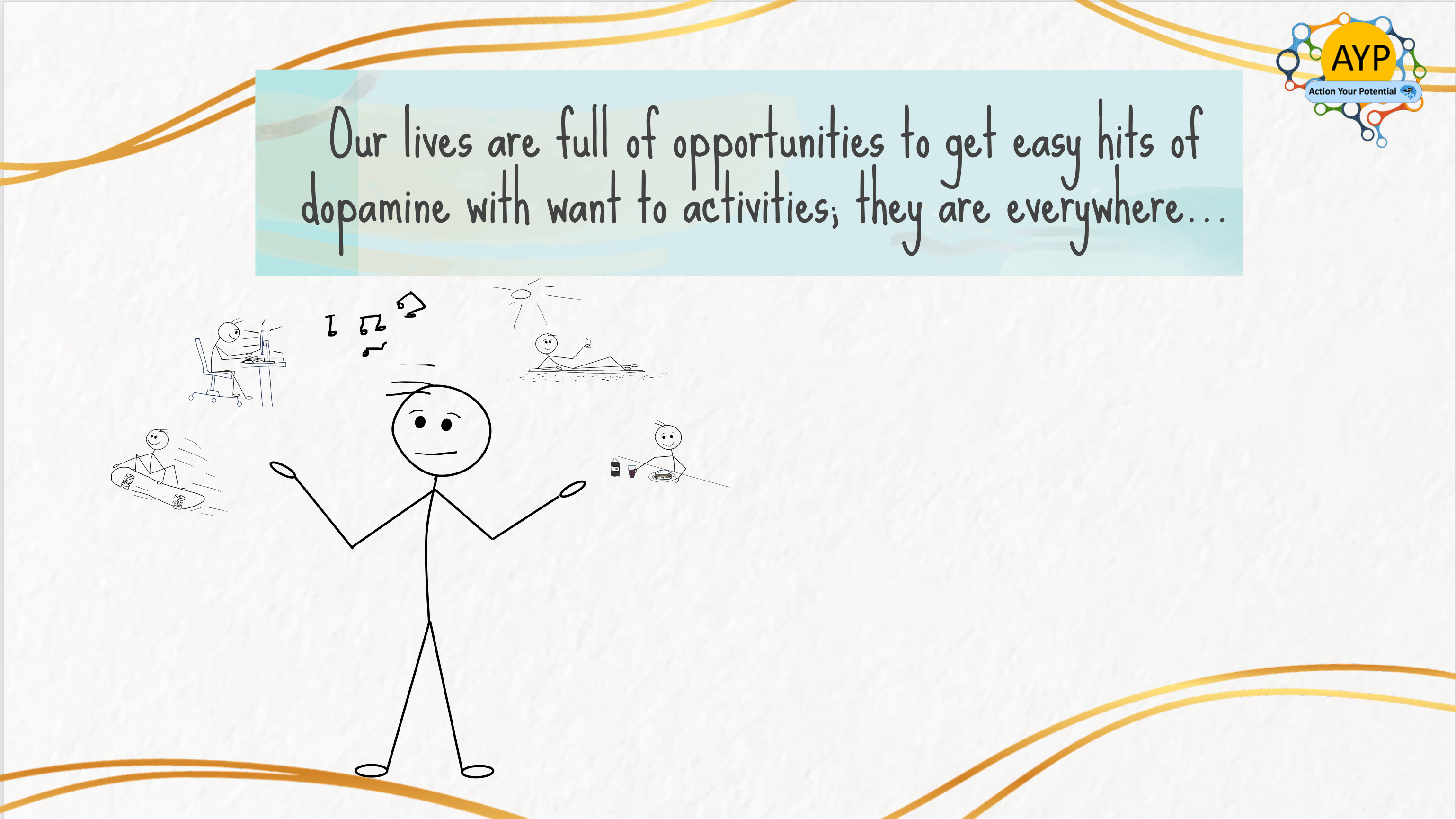
However, in our modern world, our dopamine systems are under attack like never before.
Doom Scrolling.
Everyone's heard of doom scrolling in social media. I think we all probably think it's not a great thing; mostly the idea that we are wasting our time and not getting anything productive done.
I have some bad news, it’s worse than that. Because of neuroplasticity, every single time we use social media, we are strengthening our impulsive dopamine system at the expense of our long-term dopamine system.
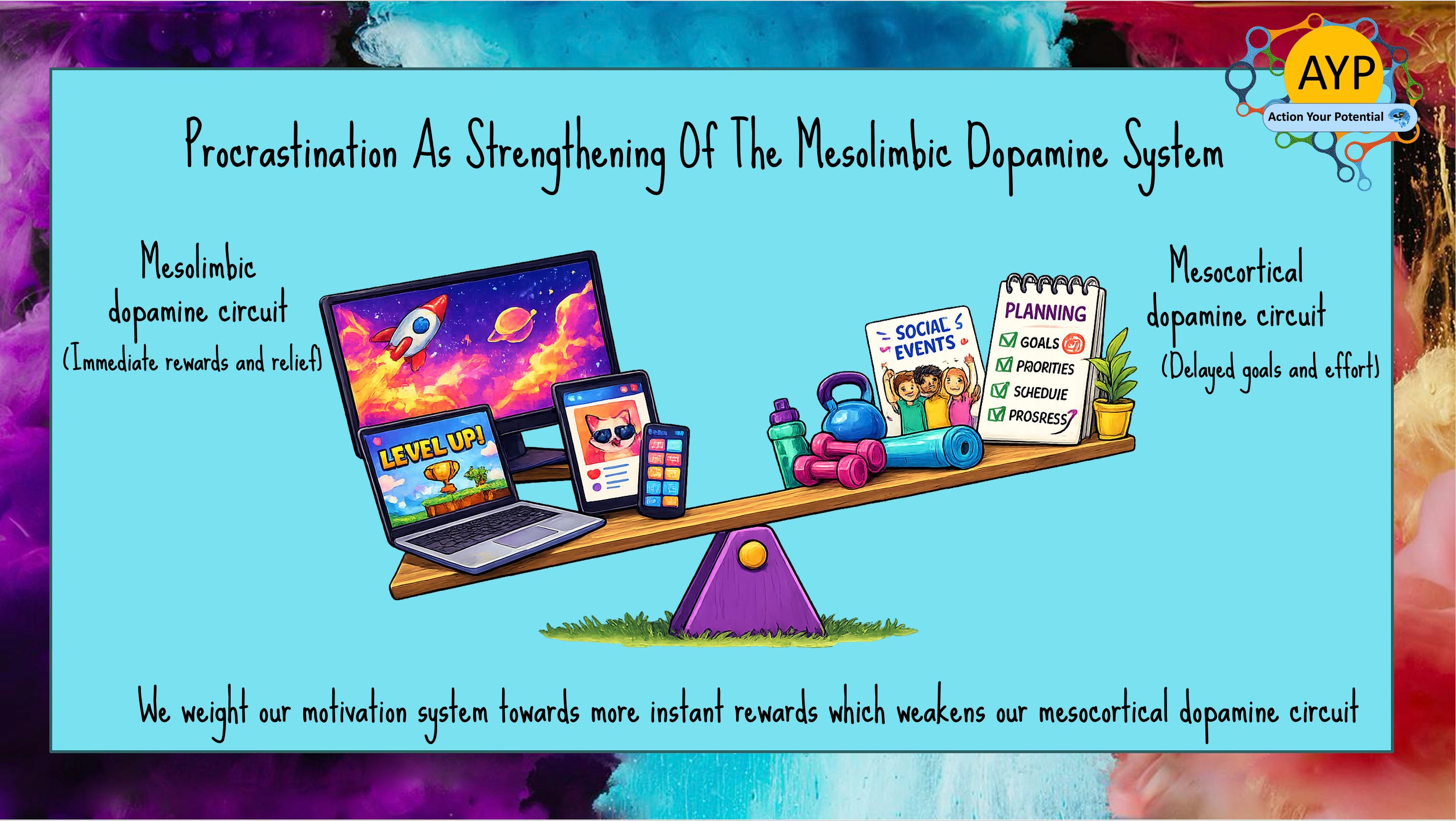
And even worse dopamine in our brain is a finite resource so the dopamine release when we are scrolling on TikTok and Instagram and YouTube et cetera is using up dopamine. Our brain no longer has the usage of it for the other tasks that we need to complete throughout the day.
So a quick scroll on TikTok in the morning is actually doing a lot more damage than just making you late for work.
Don’t panic
So, what can you do?
First of all the understanding of what social media is doing to our brain hopefully means we can build in some healthier routines and habits around it. If we need to be on social media, setting Screen Time limits on it and making sure that we don't use it throughout the day and we just maybe use it for a little period in the evening well before we go to bed.
In terms of discipline not being a reliable force this is where other strategies can come in. For example, I personally try to control my environment to make sure that I can achieve the goals I've set myself.
Obviously the tactics that we can use differ depending on the person, and if you want some help with your specific goals then please get in contact at adamwright@aypuk.com .
I am a snacker
Especially late in the evening. Confession, I hate the idea that once you finish eating in the evening you have to wait a whole 12 hours to eat again. Disaster.
It's not even that I'm hungry. It's just that I enjoy eating so much that this becomes a problem for me, especially because I no longer have access to my prefrontal cortex.
So how do I combat this? I just don't buy anything that I could reasonably eat as a snack late at night when I'm not gonna be able to stop myself.
This means I'm sitting there watching the football, wishing that I could have some Colin The Caterpillars (other sweets are available) but crucially I do not have any and I'm not gonna go and walk down to the shops to get some.
I have made the path of least resistance the one that I wanted to achieve when I was more able to plan what I wanted. :)
Summary
Discipline is often talked about as if it’s purely a matter of willpower, but that framing misses something important. Because of emergence – the idea that our mind is a product of our brain and body rather than separate from them – our capacity for self-control isn’t fixed! Instead it shifts throughout the day.
The prefrontal cortex handles rational decision-making and impulse control, but it gets worn down with use. By evening, it’s effectively offline, leaving us far more vulnerable to impulsive behaviour. You’re genuinely not the same person at 10pm as you were at 8am.
Dopamine plays a big role here too. We have two systems – one impulsive, one oriented toward long-term goals – and they compete. Social media use actively strengthens the impulsive system at the expense of the long-term one, and since dopamine is a finite resource, a quick morning scroll does more damage than most people realise.
The practical takeaway is that rather than relying on willpower, it’s worth designing your environment so the path of least resistance lines up with what you actually want. If the biscuits aren’t in the house, you won’t eat the biscuits.
If you're interested in more conversation about specific ways of tackling impulses & cravings, especially in the afternoons and evenings please check out our full episode of the podcast where we discussed this in detail!
… and listen wherever you get your podcasts! 🎧
Our show is available on all major podcast platforms
📲 we’re on social media too!
Follow us on social media!
📜 Why not subscribe, whilst you’re here 😉!
Join the hundreds of people who read this newsletter every Friday! Just click the button below to subscribe for free.
Thank you for reading this edition of The NeuroNinja Newsletter!
The NeuroNinja Newsletter was written by Adam Wright. Edited by Angela Wright.