
How to actually 'Lock In' 🔐
The neuroscience behind your attention span – and how fix it

LOCK IN, fam
As the kids say, when referring to attention and beating procrastination “you gotta lock in!”
I am actually Gen Z, despite all evidence to the contrary, even though the start of this newsletter does give the same energy as the meme below.

In a world of social media, 24/7 news and so. much. content. to constantly stream and engage with, it’s no wonder you often hear people lamenting the ‘loss of our attention spans’.
I’ll admit, as a pedant, this phrase does annoy me.
The ability to pay attention is not a base quality any of us posses, no babies are born able to focus on one thing for a very long time. In fact, it’s famously the opposite!
Like with most things brain, the way our attention actually works is far more complicated than ‘just pay attention’ or just ‘lock in’ – these are skills we can only develop through practice.
What even is attention?
Great q, disembodied newsletter voice.
First let me (re)introduce you to your Dorsolateral Prefrontal Cortex (DLPFC). This subsection of your Prefrontal Cortex (PFC) is primarily responsible for executive function.
These are skills like planning, organisation, time management, flexibility and yes, attention.
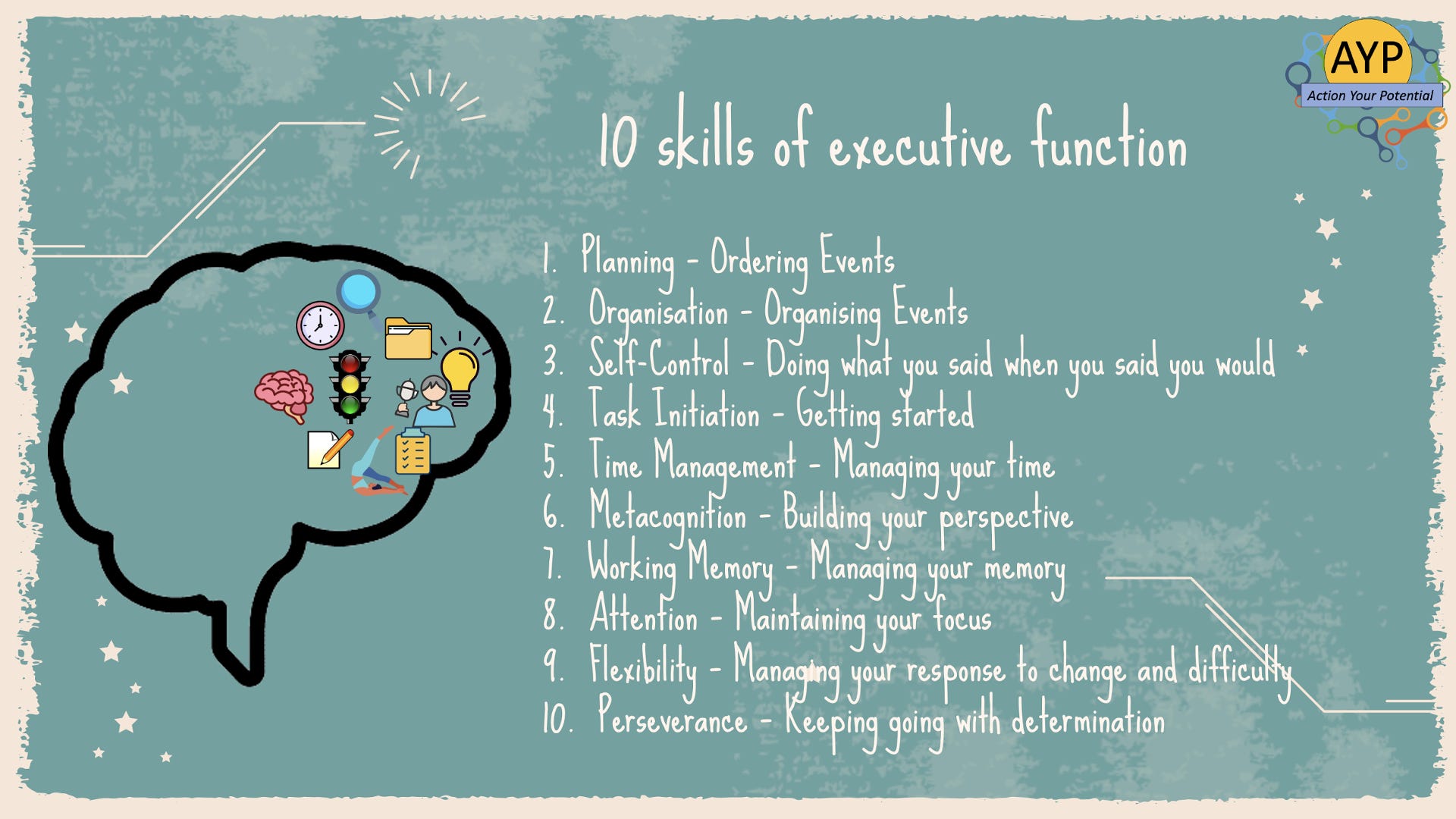
Yup, you read that right, these are SKILLS, not character traits.
So, respectfully, no one is an inevitably ‘disorganised person’ or ‘not a planner’. These may be accurate descriptors of your experience at the moment, but this CAN change.
Anyway, back to attention*
*There’s a joke there about getting sidetracked but I can’t quite articulate it…
When we are first born, it’s helpful to think of our attention as a lantern of light emanating from our brains.
Everything is interesting and illuminated, quickly focused on and then just as quickly forgotten about.
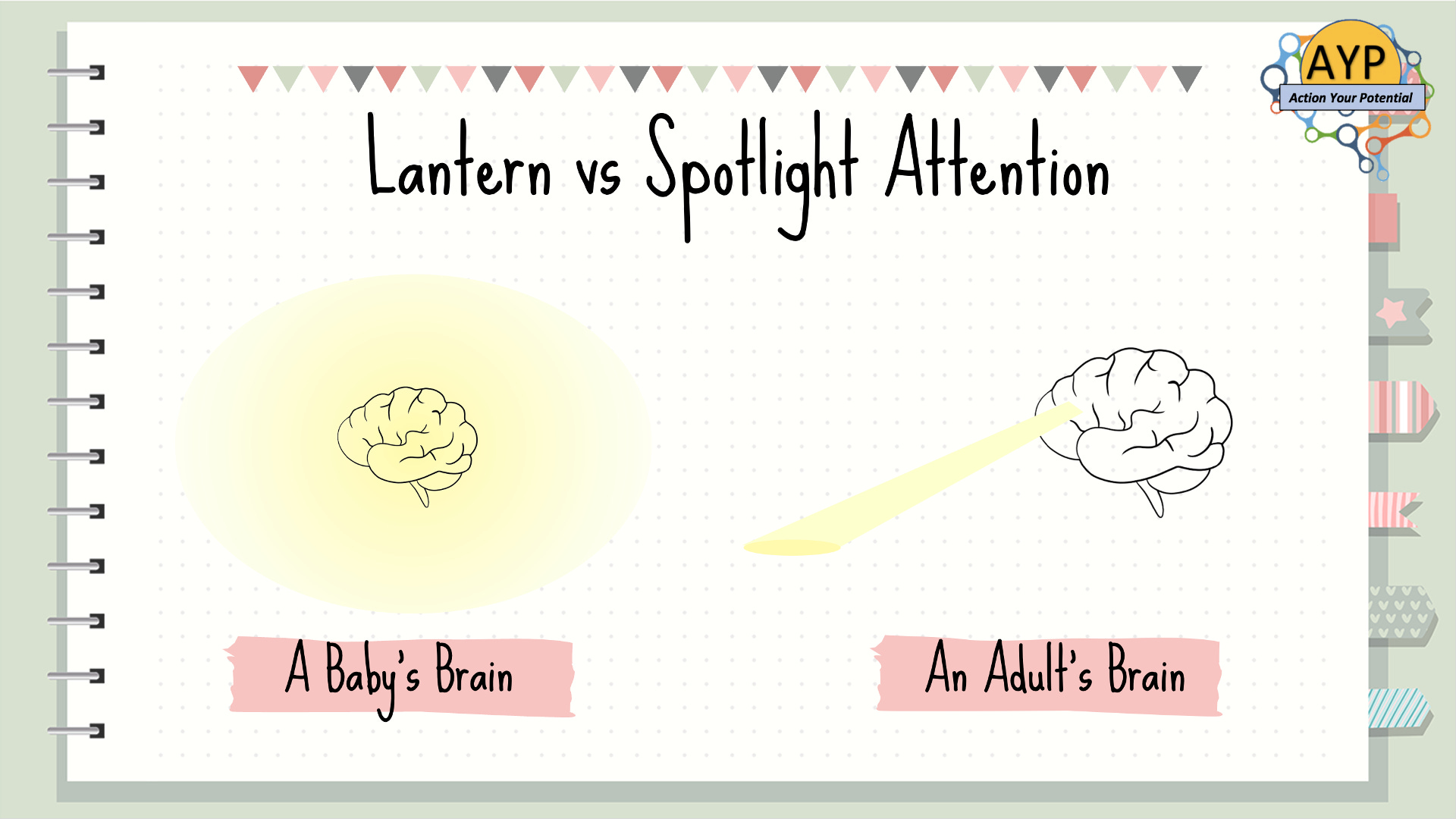
As we grow up and our DLPFC develops more it is effectively able to focus that ‘light’ of attention into a spotlight.
To do this, your DLPFC has to effectively suppress a bunch of neural firing happening across the rest of your brain, so that your conscious mind is unburdened by managing the rest of your cognition.
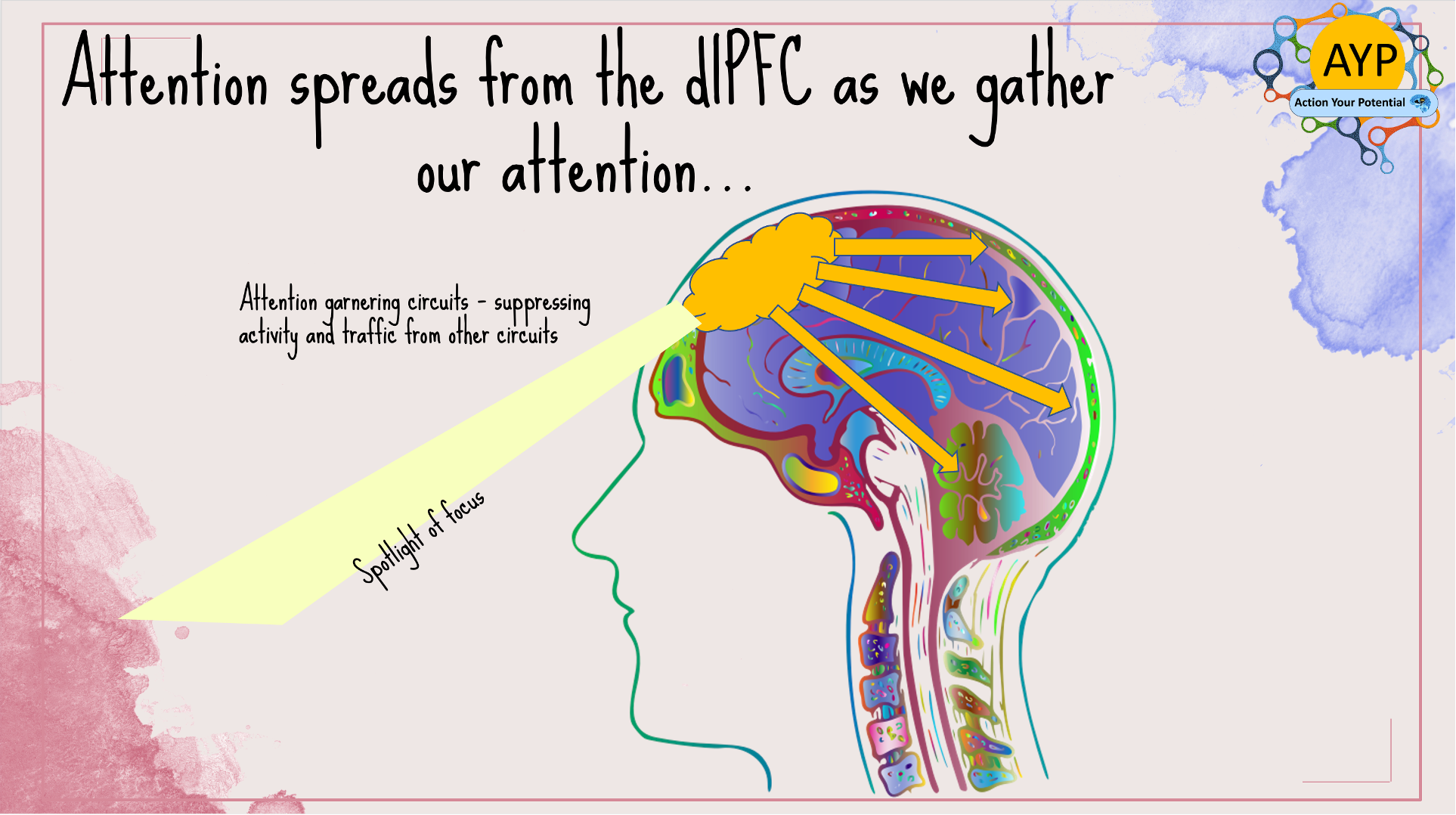
I sometimes describe this process to clients as looking a bit like a face hugger from the movie Alien… though less gross and immediately terrifying.

So, focus is hard?
Yeah!
Attention requires a lot of work on your brain’s part, which is why, in all honesty, adults tend only to have a decent 25-40 minutes of good deep focused attention on hard challenges and tasks – like revising – before our brain literally cannot maintain this focus.
This is why it’s really important we have regular active rests when studying and learning, for example, to reset our attention circuitry.
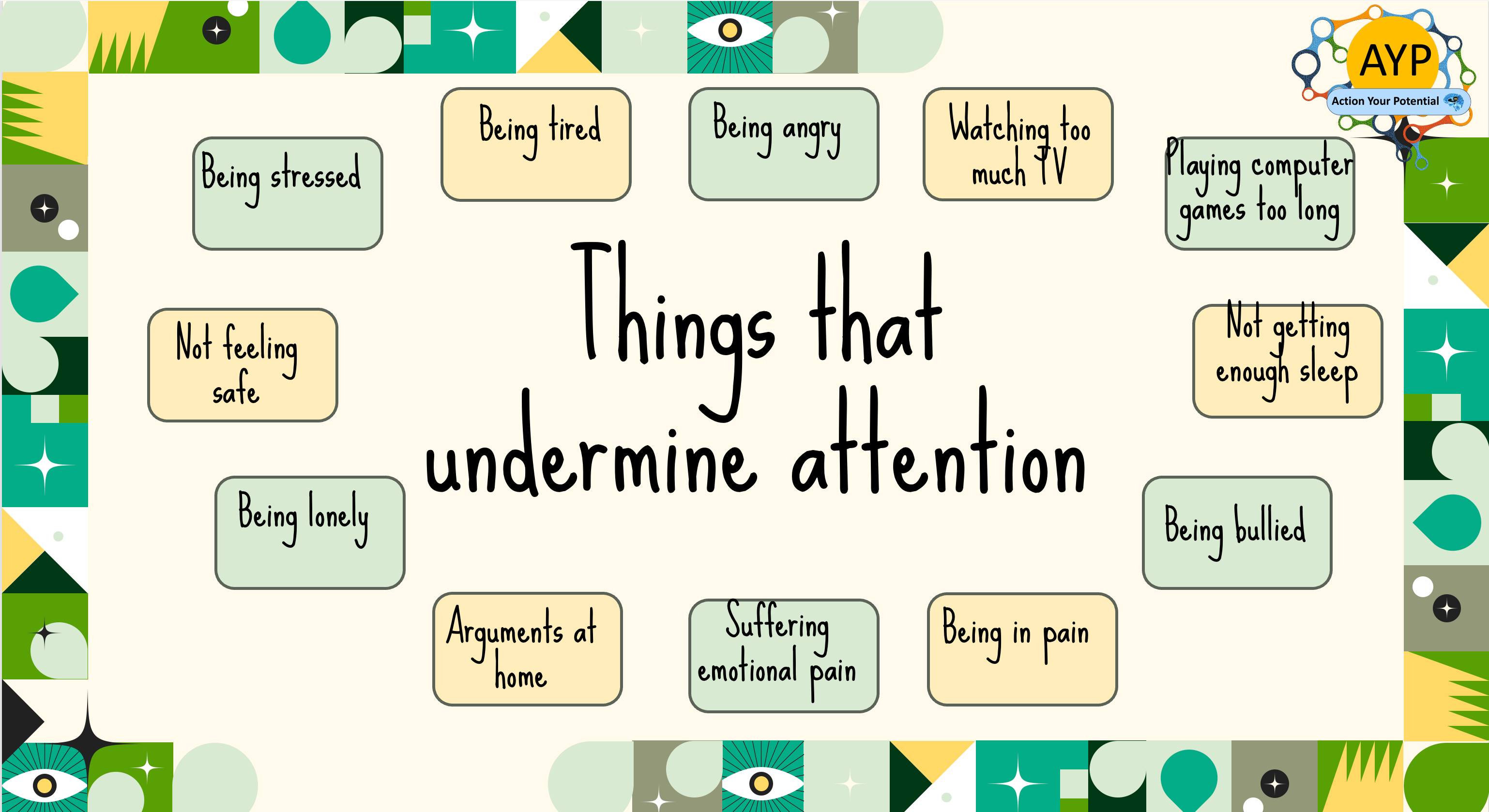
Flow State
Before I get to how to we can train our attention span, and lock in, I need to discuss flow state real quick.
You’ve inevitably heard about flow state, and you’ve also definitely experienced it multiple times in your life – even if you don’t realise it.
By it’s nature, flow state is a state of consciousness where we are getting lost in the flow of whatever we are doing. Because we are ‘getting lost in it’, we often don’t realise we’ve entered into a flow state.
The secret to this state is your mesocortical dopamine system, your slow release reward system.
Very basically, you have two dopamine systems – one that incentivises impulsivity, and one that pushes you towards longer term rewards.
Here’s me explaining their function and utility on a recent podcast episode.
By nature, your mesocortical dopamine system doesn’t immediately release as much dopamine – but as you continue pursuing an activity it gradually increases the amount you are receiving – feeling absolutely fantastic.
That is flow state, that gradual increase and sustained dopamine release.
AD BREAK?!
Not really… we aren’t that big… YET!
But, we are now setup on ‘Buy Me A Coffee’!
There’s absolutely no obligation but any donation would help us make the free actionable neuroscience content you enjoy every week!
(Fear not, the podcast and newsletter will always be free for everyone!)
You can buy me a coffee here, today! 🥹
ahem, where were we… oh yes! Runners High
A classic example of flow state is the ‘runners high’, the experience of joy and happiness you get when running regularly and often over a longer distance.
It’s important to caveat that with flow states done during exercise, endorphins also come out to play to suppress the pain signals your body is sending to your brain – but the dopamine release is the same.
Very cool, thanks. How do I train it then?
No worries! Loving the affirmation from the titles in this edition…
So, like with any sort of training – it’s consistency and routine that makes all the difference.
Now you know that your attention span is a skill, a thing you need to practice daily in order to improve it – what are the most effective ways of practicing it?
Before we dive in, PHONES
Phones are a disaster for attention. In literally every way. I posit no one has ever, in human history been in flow state whilst using their phone, scrolling instagram etc. It’s biologically impossible.
Your phone, its constant notifications, quick dopamine hits and speed of distraction is a shortcut to never accessing a flow state.
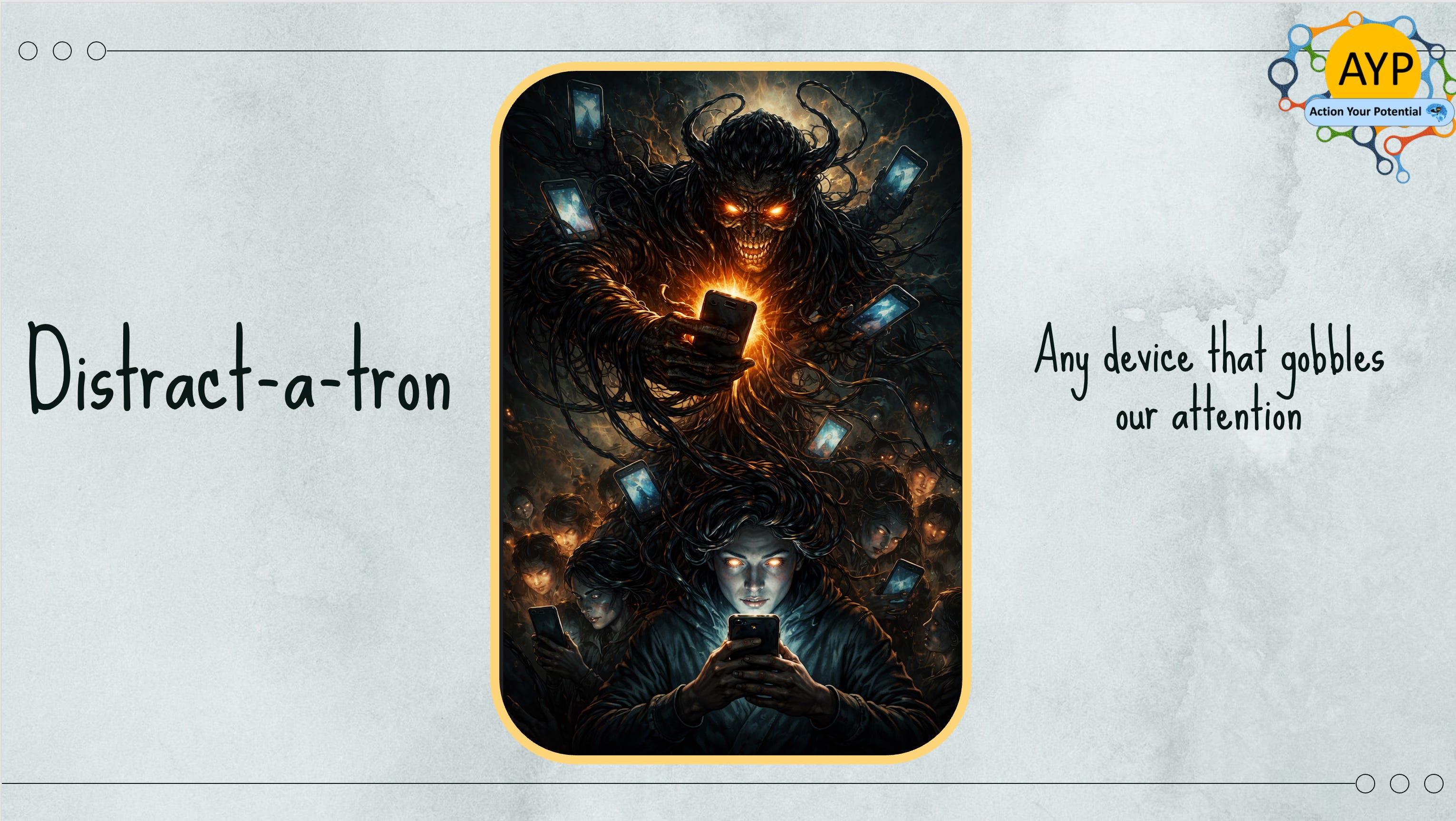
So, if you are trying to achieve a flow state in your life, or practice attention – move away from your phone. Put it in another room, in your bag, make sure it isn’t easy to access – and turn off notification noises.
Your DLPFC is no match for it’s quick dopamine hits. So help yourself out and remove yourself from it to practice your attention.
Reading
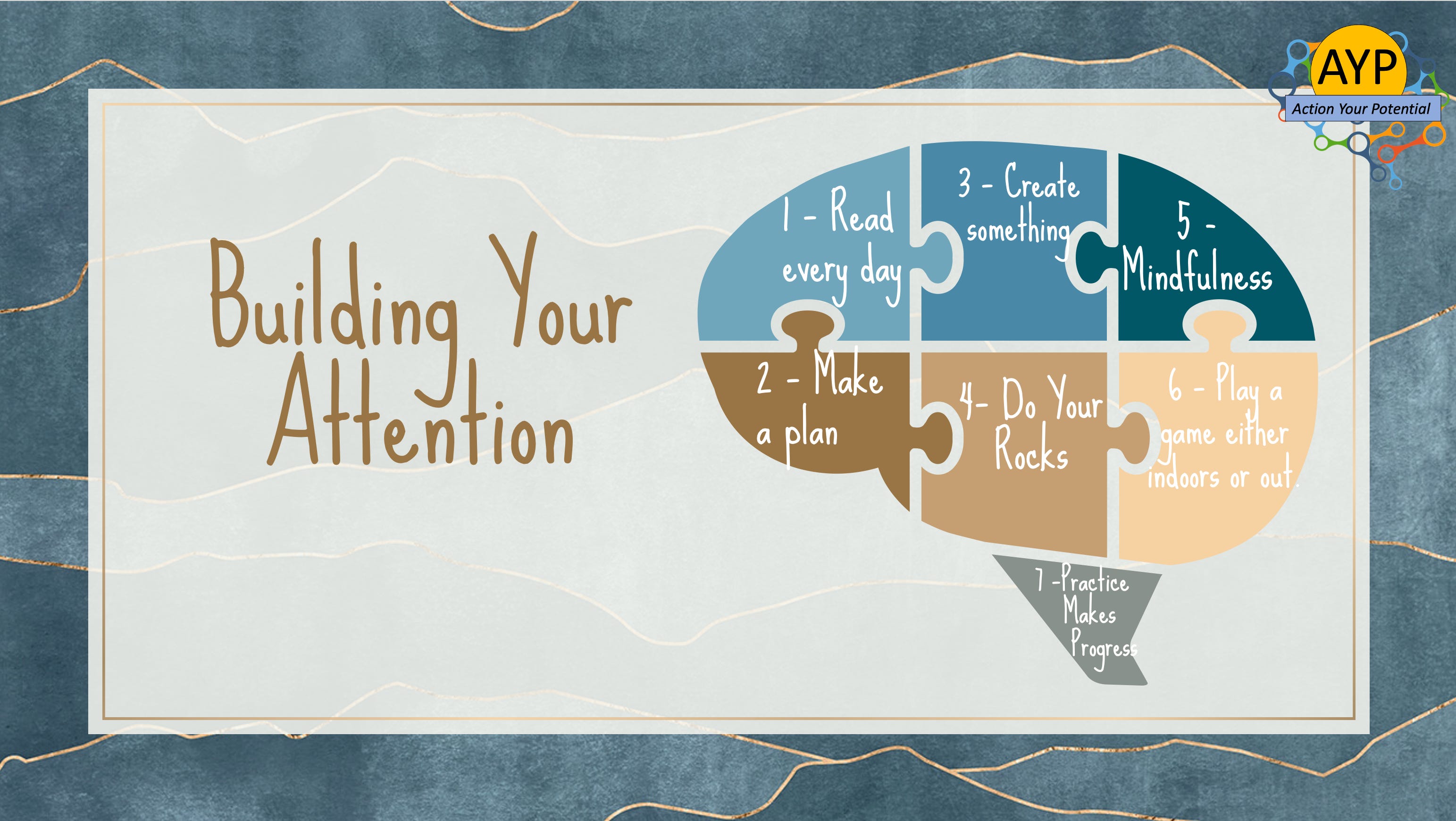
Reading is possibly the best and most universal way to practice attention. If you think about it, reading is an incredibly involved process for your brain.
Right now, you are reading these small weird little symbols and your brain is simultaneously deciphering them, encoding them and generating a meaning out of them. Amazing!
That requires a lot of work, and doesn’t immediately generate a strong dopamine response.
You should read for the sake of reading, all the stories, narratives, characters and worlds you haven’t yet discovered – but if all you’re interested in is attention-maxxing (as it were) reading is the first place to go.
Mindfulness & Meditation
Sitting and just being is also a profound way of strengthening your attention span, with the added bonus that you further develop your interoception skills as well!
Just focusing on your breathing, catching your thoughts drift and refocusing them is profound for your attention span – and increases your ability to notice the attention shift. It’s like a compound lift at the gym, you’re also strengthening your attention spans ability to pay attention to itself… if that makes sense.
Creativity.
This can be writing, drawing, painting, etc!
Creativity is a necessity for a happy healthy brain, and profoundly boosts your attention span.
Create something people, your brain will thank you.
Sport!
Sport is also profound for your attention span. This includes any sport, but mostly those that you take part in for a longer period of time.
Each sport is different, but take tennis for example. You’ve got to pay a profound amount of attention in order to be able to position yourself, swing your racket etc etc.
Anything that takes time..
This has been by no means an exhaustive list (though some of you made argue this has been an exhausting list. Rude.)…
but a good rule of thumb would be to think about any activity – and ask whether it benefits from long term investment.
For example, creating something. Writing a book, drawing a picture, painting a portrait etc all take so much time, so to engage in them we would need to utilise our attention circuits and flow state architecture.
That bit where I wrap it up
Attention isn’t a personality trait you either have or don’t – it’s a skill, built and maintained through practice. Your DLPFC is doing serious heavy lifting every time you focus, which is why deep concentration has a natural ceiling of around 25–40 minutes before it needs a reset.
The goal is flow state – that absorbed, effortless feeling powered by your long-term dopamine system gradually building as you stay with a task. And the single biggest obstacle to getting there? Your phone.
It’s not a willpower problem; the quick dopamine hits from notifications are simply more than your DLPFC can compete with. Remove the temptation rather than fighting it.
To actually train your attention, the principle is simple: anything that rewards long-term investment will do the job. Reading, mindfulness, sport, creativity – all of these demand sustained focus and build the circuitry over time. The more consistently you practise, the longer and more easily you can lock in.
Your attention span isn’t disappearing. It just needs training!
Need more ways to practice attention spans?
Well, you could try our podcast out!
Our (free) actionable neuroscience podcast drops every Monday!
You can watch the latest episode here!
…or listen wherever you get your podcasts:
…follow us on social media!
Want to help us make this newsletter possible?
We’re now setup on ‘Buy Me A Coffee’!
There’s absolutely no obligation but any donation would help us make the free actionable neuroscience content you enjoy every week!
(Fear not, the podcast and newsletter will always be free for everyone!)
You can buy me a coffee here, today! 🥹
📜 Why not subscribe, whilst you’re here 😉!
Join the hundreds of people who read this newsletter every Friday! Just click the button below to subscribe for free.
Thank you for reading this edition of The One Brain At A Time Newsletter.
This edition was written by Adam Wright and edited by Angela Wright.