
Change for change's sake.
The neuroscience of change-anxiety, and how to get better at dealing with it

“There are three constants in this world…
… death, taxes and change.”
You may have heard this (admittedly slightly paraphrased) quote before. It's often attributed to Benjamin Franklin and contains a lot of truth, and a sprinkling of #politicalsatire.*
*I think there’s a strong argument for a fourth constant, that being “roadworks in Ringmer”, but that’s a fight for another day.
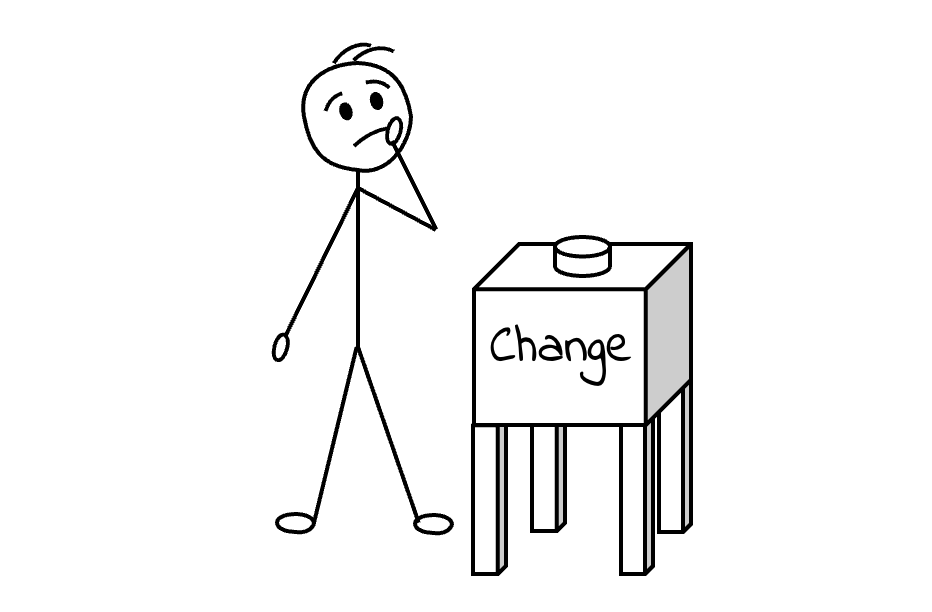
You probably hate change. It is literally the most natural thing in the world to hate change. Yet change will happen, positive change, negative change, self driven change and change you can do nothing about.
In this addition, we're going to look at why brains hate change and why we need to start thinking of ‘change’ as a skill.
Models ‘n’ that.
To understand why your friend has changed, we first have to understand how our brains understand the world.
First things first, you aren’t actually your brain. You’re not even your body. Instead through a complicated process called emergence your body and brain combine to project your mind.
Understand your mind as your consciousness, the part of you where you make decisions. The bit of you reading this right now is your mind.
Emergence is a big, complex concept – but I’ve found that a useful way of explaining it is to actually look at a brain.
So how do you understand the world? Your brain is constantly constructing models. I always think of these models like levels in a video game, your brain is generating floorplans, schematics and little versions of the world around you.
A way to demonstrate the profound power of models is to ask a simple question, “can you remember your childhood bedroom?”
I bet you can, and I bet it’s a really clear memory.
Ultimately, your brain constructs models to keep you safe. Think of it like this, if your brain knows where everything is and where everyone is, there are no threats the brain has to immediately respond to.
However, since models are built through experiences – we are not always going to have models for the world. Indeed, sometimes situations change and our model has to update.
That brings us to…
Cognitive Dissonance
Simply put, this is the process of your brain constructing a new model. Your brain is coming into a situation where it doesn't have a model, or the model it has is incomplete – therefore has to rapidly construct a new version.
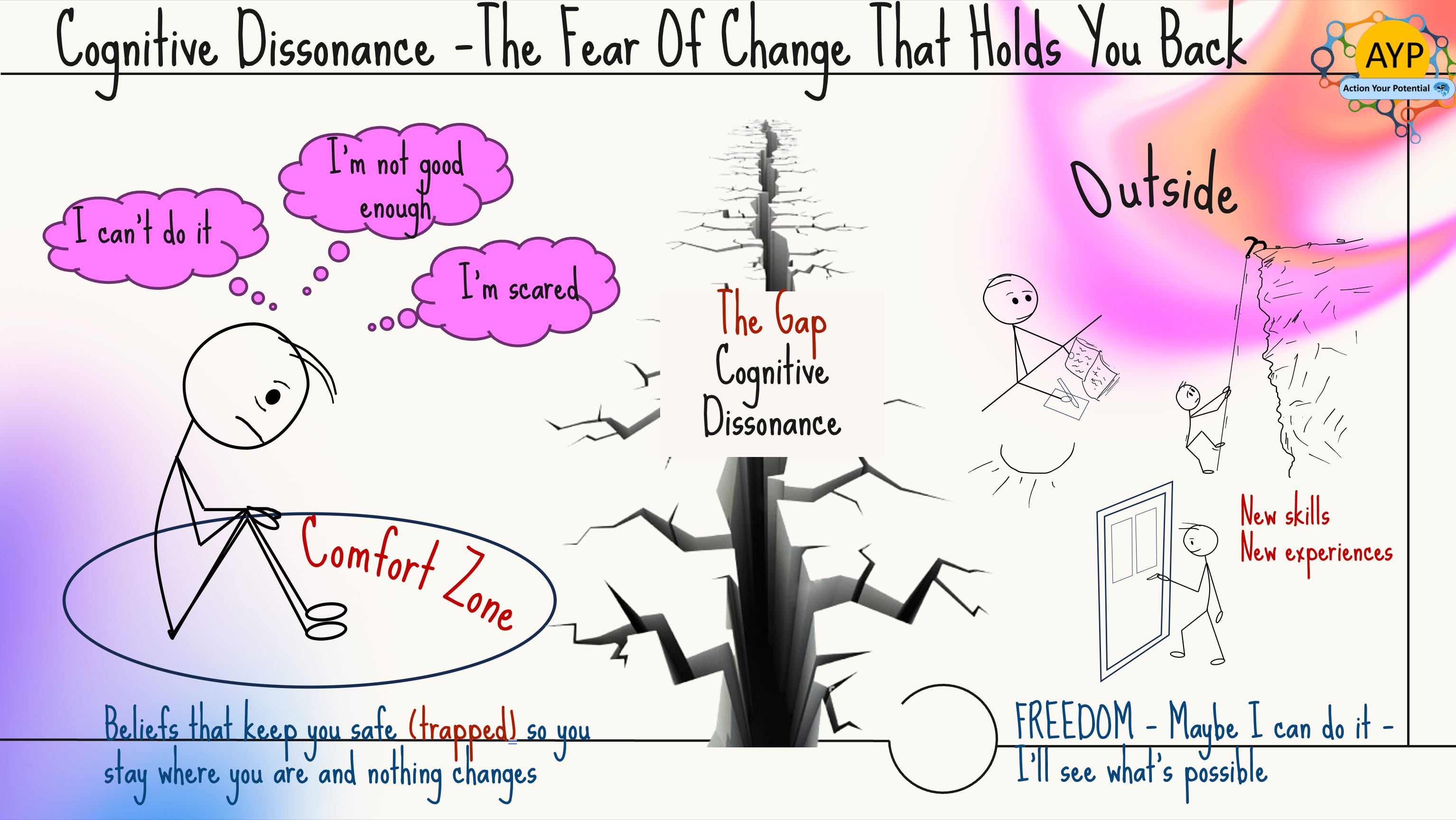
This process requires energy. Thus your brain releases energy into your system to help it construct a new model, but also to allow us to fight, flight or freeze to escape from this new situation.
This is your sympathetic nervous system, your threat response system.
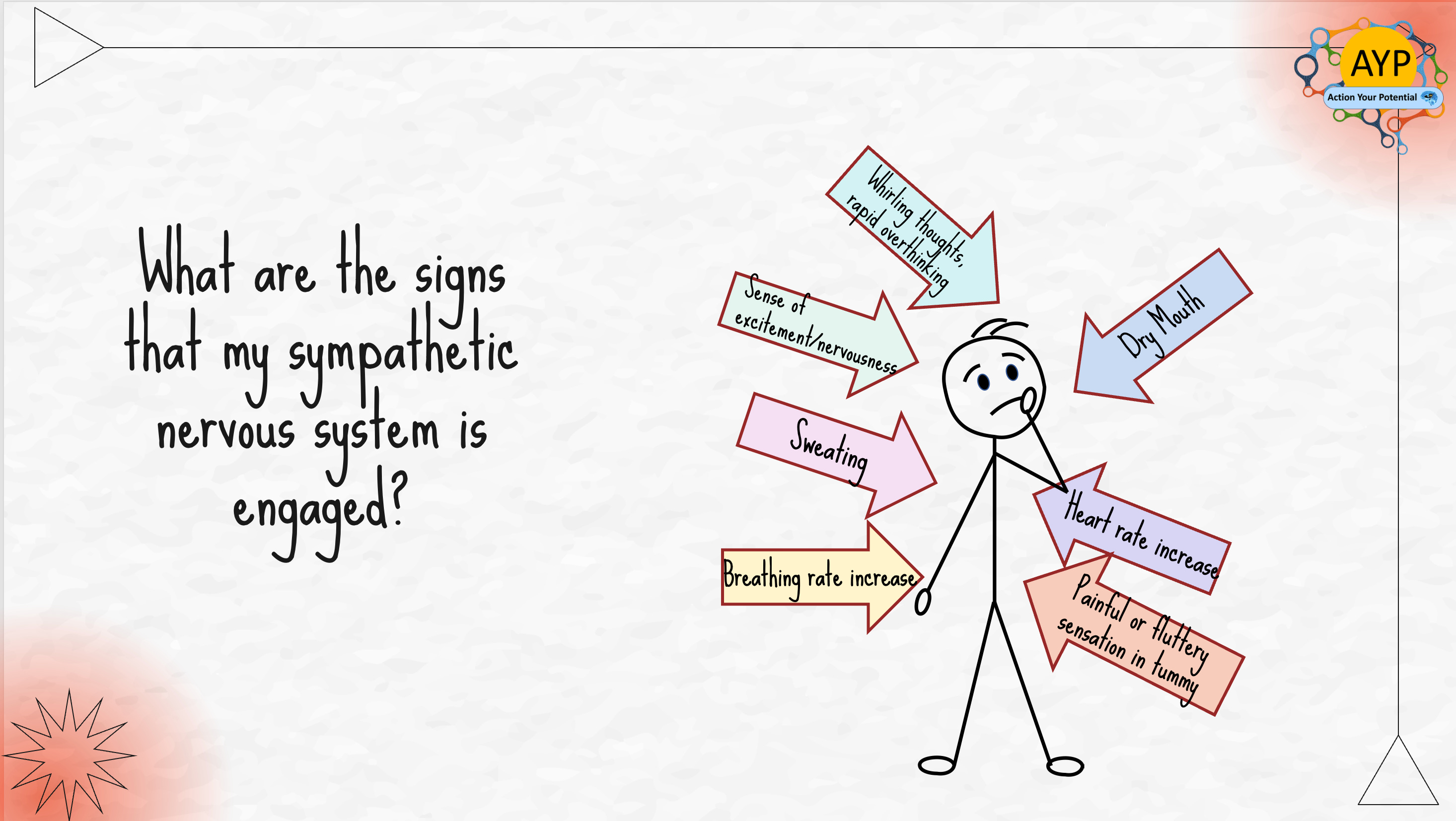
How everyone feels when they're in a moment of sympathetic nervous system activation is slightly different, but we generally feel stressed, our heart rate increases, we may start sweating etc.
Why?
As with all things, biology and neuroscience, it comes back to survival. The brain in your head right now is the same biologically as the brain that evolved thousands of years ago when we lived in small tribes on the African savanna*
(though it obviously wasn't called Africa then, and due to tectonic plates it wasn't the same continent that we now know today as Africa… but you get the point!)
So for a caveman, any change was a threat. A literal life or death threat. A change in where the berries were found? No food = death. Wolves have been seen on the perimeter = death. Walking in the forest, hearing a twig snap? Maybe a Predator = death.
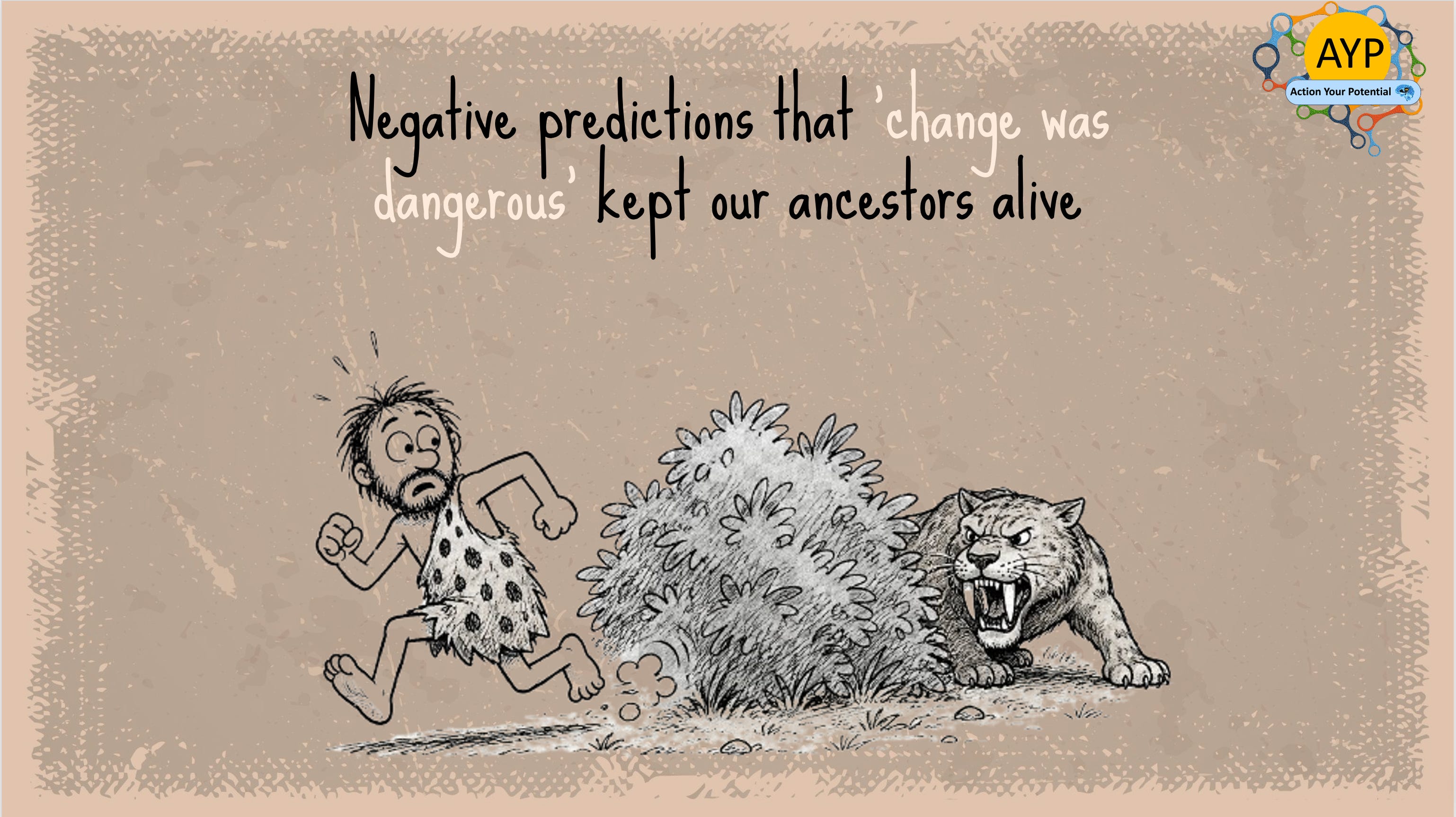
Evolution has meant that the most cautious and terrified cavemen were the ones to passed down their negative dispositions.
This disposition is also known as a ‘Negative Bias’, and we all have one by default.
Change.
That brings us to a modern understanding of change. We need to understand that when something changes in our world, no matter how small, our brain is going to react in a powerfully negative way.
Negative reaction to change often takes the form of a ‘maladaptive reaction’
These reactions can be anything from worrying, to shouting, to violence, to turning to substances to dull/numb emotional pain etc.
Maladaptive reactions are a product of a disregulated and struggling body and brain.
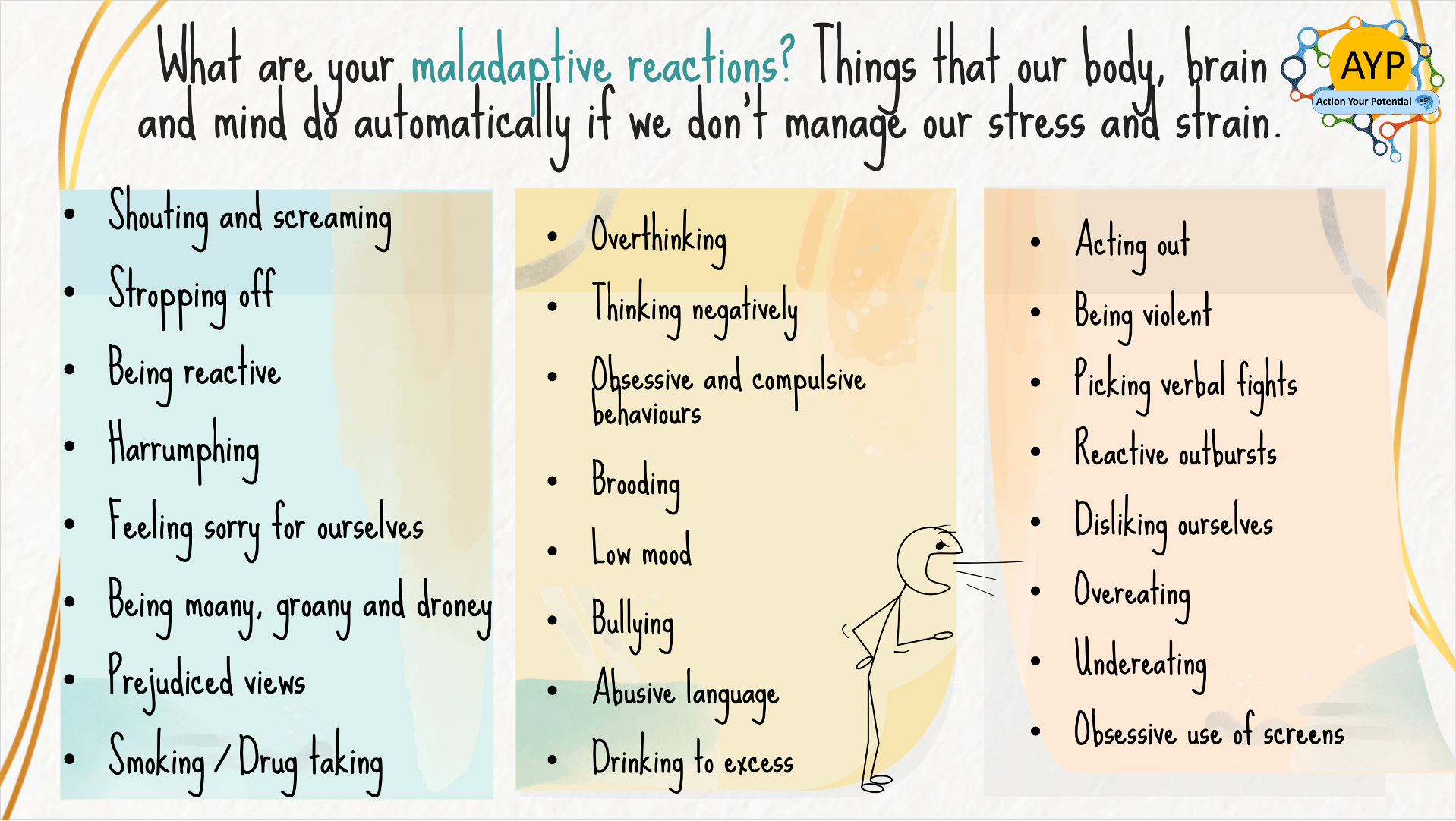
And, due to the nature of ‘change’ being a nebulous problem, managing our response to it is particularly challenging.
So, what can we do?
The science of neuroplasticity teaches us that for the brain everything is a skill. From guitar lessons to learning mathematics to paying attention and reading, these are all skills for the brain.
Fundamentally, your brain just gets better at what you do with it.
In the model sense, your brain builds more models for the thing you are learning to do, which it can then deploy more often and update more regularly.
So… We need to practice change.
What? How?
Yeah! We need to practice change.
Genuinely the best way I can think to demonstrate this is through graphs!
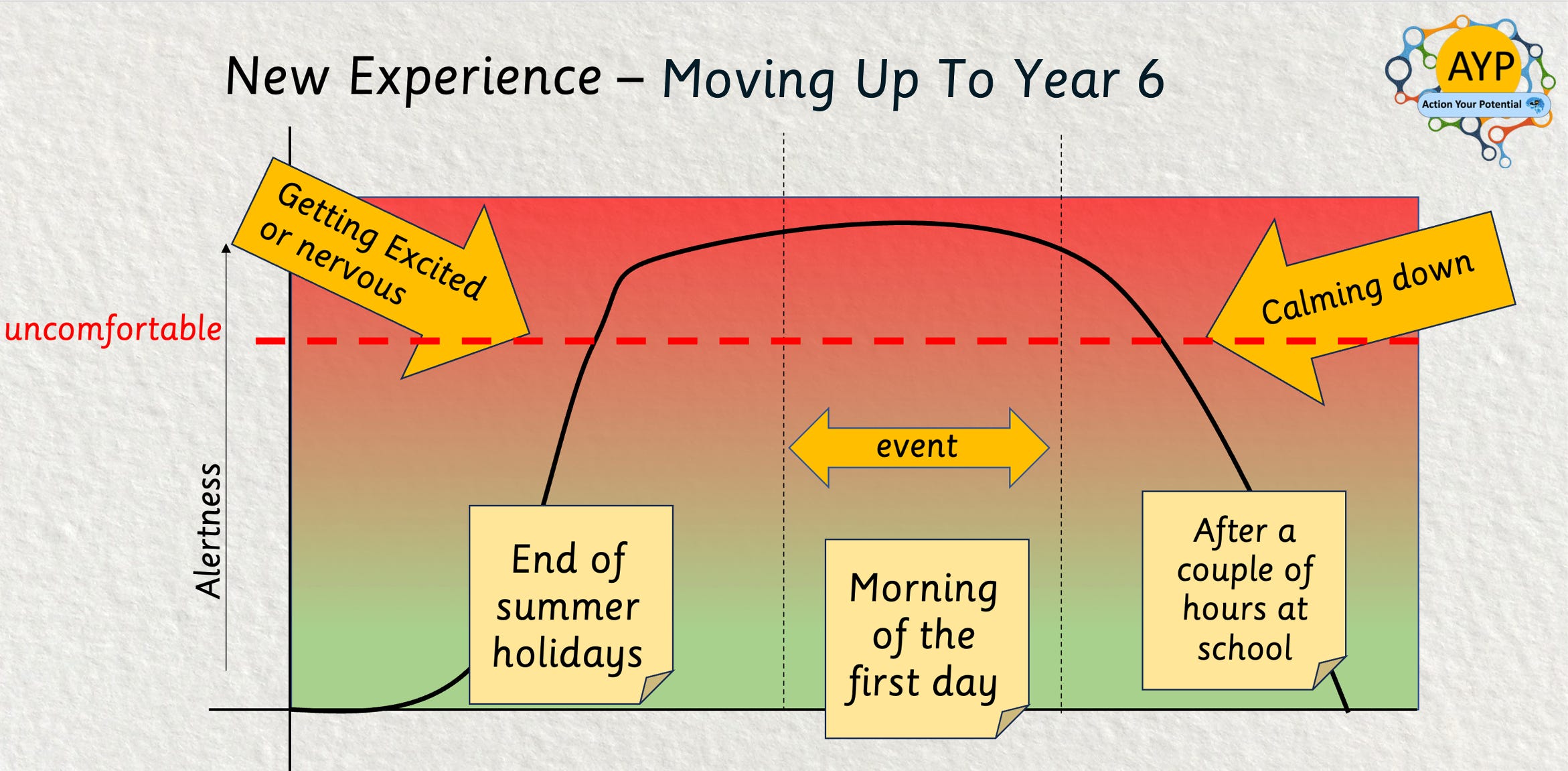
This graph has been nicked from a presentation about moving to Year 6… but the principle still applies!!
In this graph, you can see that someone who is nervous about going back to school gets put into an uncomfortable space as the school day approaches – this uncomfortableness is simply the feeling of their brain releasing the energy to help them to construct the new model, then as their brain builds that new model they calm down and return to a space of feeling more comfortable again.
This is the ideal scenario! Obviously, it's not fun to be worried about something, but this graph also demonstrates the fundamental truth that once your brain builds a model, you will be able to calm down again.
If we keep doing new things, controlled but challenging and slightly scary experiences, our brain won't release as much energy when it needs to construct a new model. It gets used to the fact that this is something we do all the time.
Thus, our experience of changed starts to look a bit more like this graph below!
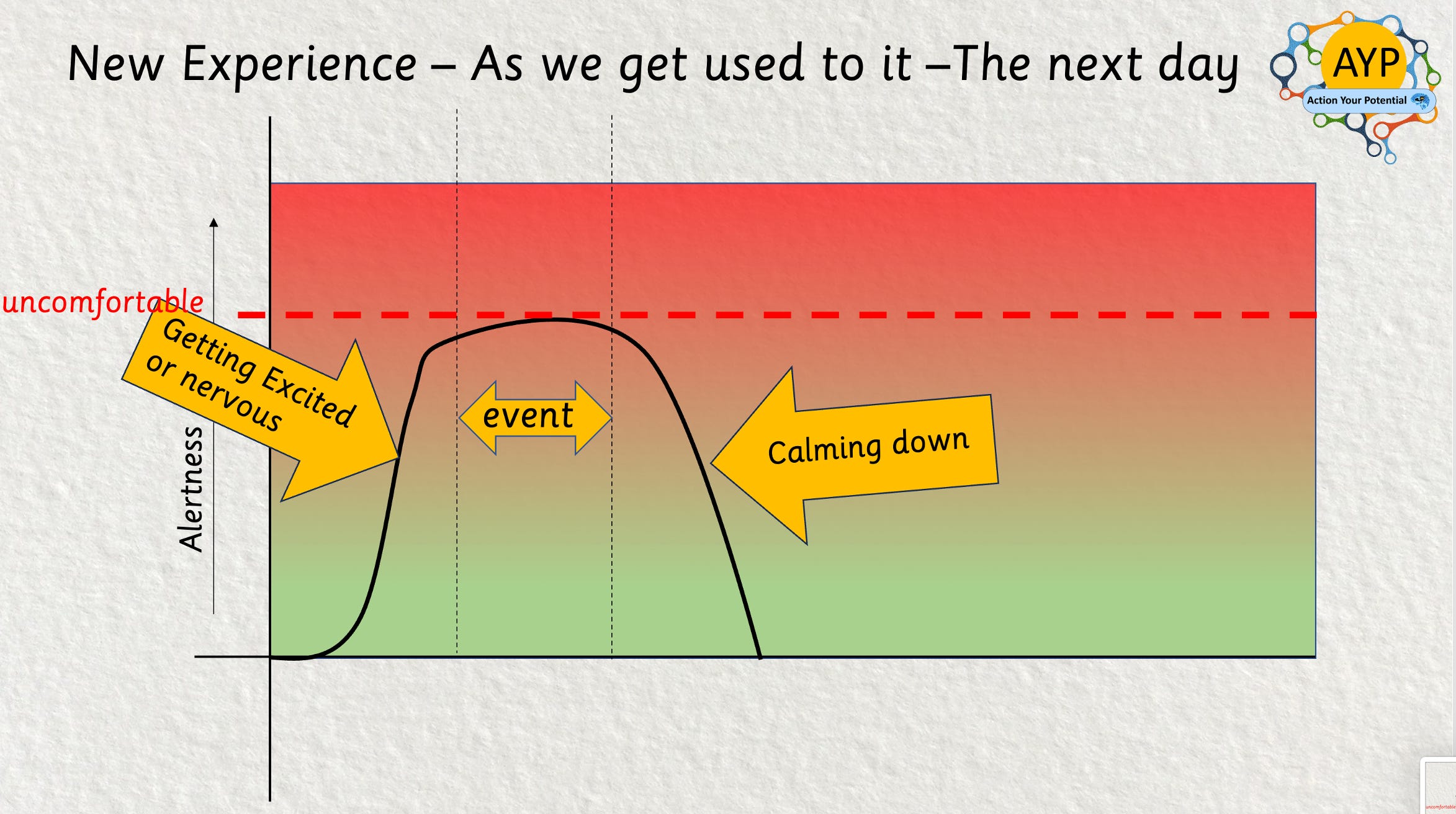
Obviously depending on the change our reaction will be stronger or lesser but no matter what, our brain is better at dealing with any change.
This is a super important not only because it means we won't be as stressed out by change, but also because of the alternative.
The graph below shows that same year six student being ruled by their uncertainty and stress… and eventually not allowing their brain to build a new model because they avoided school entirely.
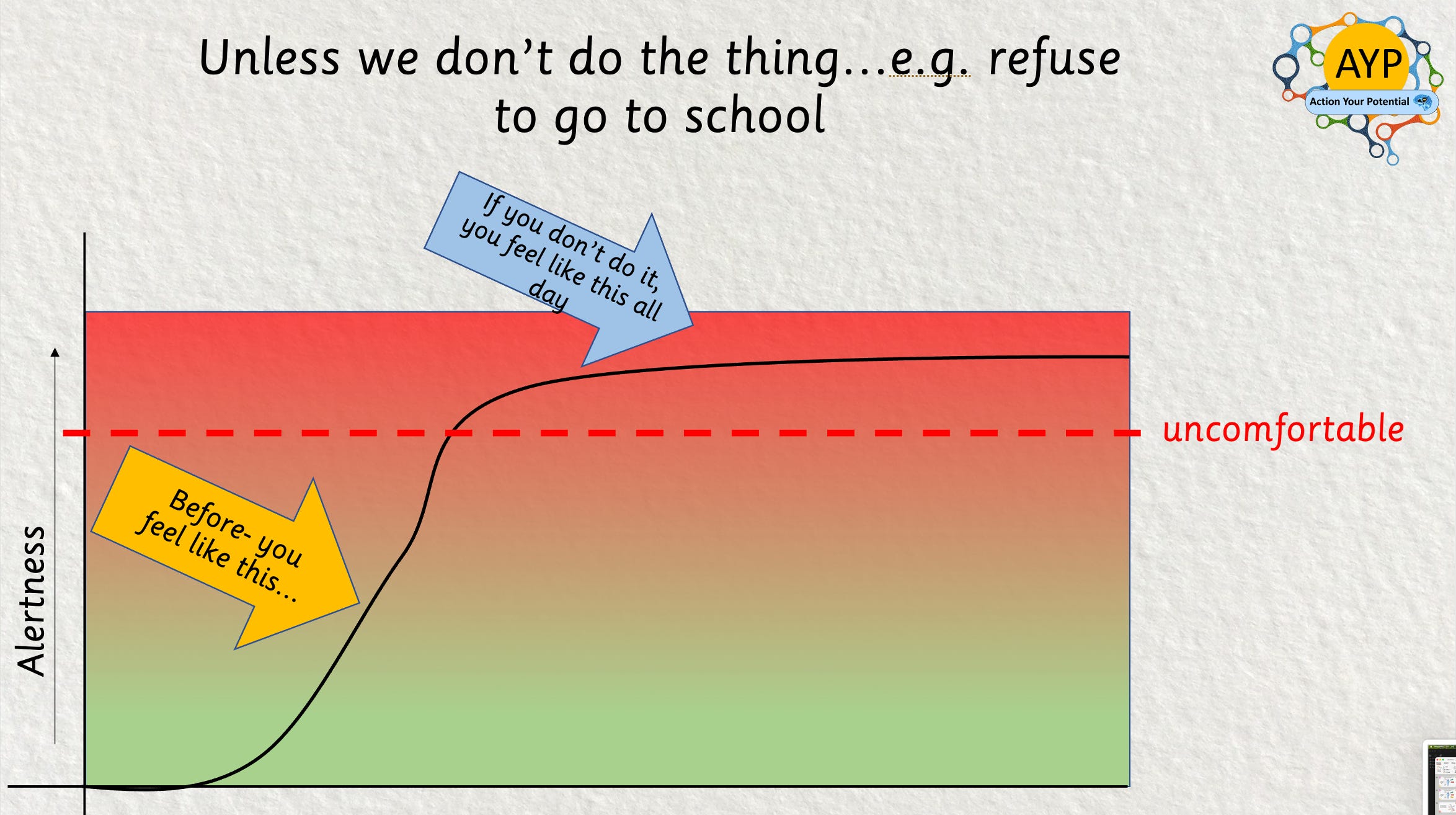
You can see that their brain and experience doesn’t calm down, just worsening and building up that challenging change experience.
Wrap up
Change is inevitable – and the brain is wired to hate it. That’s not a character flaw, it’s evolution. Any unfamiliar situation triggers the brain’s threat response, because for our ancestors, the unknown genuinely could mean danger. That negativity bias is baked in by default.
The stress we feel around change is simply the brain burning energy to construct a new model of the situation. The good news is that once that model is built, the discomfort passes – which means the discomfort is always temporary, even when it doesn’t feel it.
And crucially, the more we expose ourselves to new and slightly uncomfortable experiences, the less energy the brain needs to spend each time. Change itself becomes a skill. The brain gets better at adapting, and the stress response becomes smaller and shorter.
The alternative – avoiding change altogether – doesn’t protect us. It just means the brain never gets to build the model, and the anxiety compounds rather than resolves.
The takeaway: lean into small, controlled challenges regularly. Not because it’s comfortable, but because it trains your brain to handle the inevitable bigger changes with far more ease.
Got some spare ‘Change?’ 🤑
Taking a moment for that excellent pun….
Helping us bring you weekly actionable neuroscience might be a good place to start 😉 (though I am biased.)
We’re also now setup on ‘Buy Me A Coffee’! There’s absolutely no obligation but any donation would help us make the free actionable neuroscience content you enjoy every week!
(Fear not, the podcast and newsletter will always be free for everyone!)
You can buy me a coffee here, today!
You can also…
… listen to our podcast!
Our (free) actionable neuroscience podcast drops every Monday.
You can watch the latest episode here!:
…or listen wherever you get your podcasts:
…follow us on social media!
📜 Why not subscribe, whilst you’re here 😉!
Join the hundreds of people who read this newsletter every Friday! Just click the button below to subscribe for free.
Thank you for reading this edition of The NeuroNinja Newsletter!
The NeuroNinja Newsletter was written by Adam Wright, and edited by Angela Wright.